
Protecting families from contaminated food and water
All fields are required
Protecting families from contaminated food and water
Posted in Food Policy,Our Blog on April 16, 2026
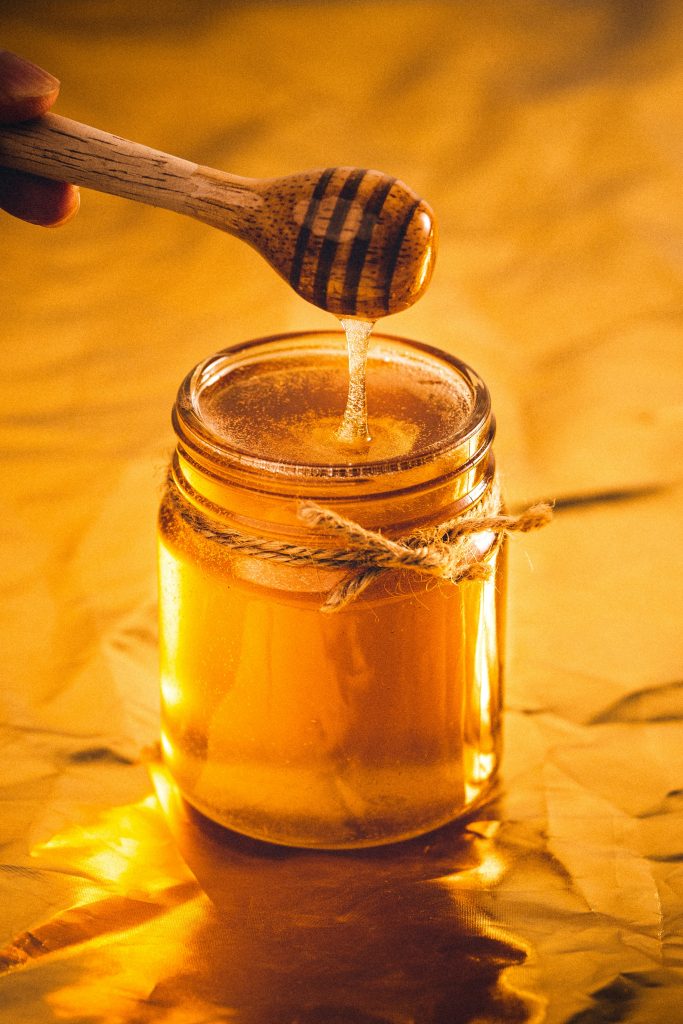
Adulterated honey is placed in the marketplace for many different reasons. The most obvious being “economic motivation.” As in, fraudulently passing a sugar substance as the real thing. A substance that can be produced cheaper and with significantly less overhead.
The US Food and Drug Administration (FDA) has conducted these tested twice before, and based on the important information gleaned from these surveillance activities, it is likely that this project will continue.
During the sampling study, both domestically produced and internationally imported honey samples were analyzed.
Overall, 4% of the 102 total samples were “violative,” or contained an ingredient not listed on the label.
In other words, it was not true honey.
4% of Honey Samples Collected in 2025 Honey Adulteration Sampling Assignment Was Violative!
According to the FDA, honey samples were tested using Stable Carbon Isotope Ratio Analysis (SCIRA) on the honey sample and corresponding protein extract. The results were compared to carbon isotope ration values found in authentic honey.
If an atypical result was identified, a subject matter expert reviewed the analytical results to be sure abnormalities were not generated from natural variability in honey composition.
Great effort was made to ensure the accuracy and strength of the results. Especially considering the significant impact such a result would have on the firm importing the adulterated honey.
So, where did the adulterated honey come from?
Both domestic and imported products were tested in this sampling assignment.
There were 48 imported honey samples (country of origin was noted). Then there were 54 domestic (USA-originating honey products) samples.
So how did they fair?
Of the domestic products, 2 of the 54 (3.7%) failed.
How about the international samples?
Those did slightly worse. For imported samples, 2 of the 48 (4.2%) that were tested failed.
Both samples came from the same country of origin.
Armenia.
Similar testing occurred between 2021-2022 and 2022-2023. However, these sampling activities were not designed for comparison. Instead they were conducted for surveillance purposes and used to place import alerts on fraudulent producers. There was no emphasis on domestically produced honey.
With the understanding that these results cannot be compared directly. I was still curious how the numbers fell.
Between 2021 and 2022, of the 144 imported honey samples collected and tested, 14 “were found to be violative.”
That is a significant 10%!
Between 2022 and 2023, 107 imported honey samples were collected and tested. The FDA found 3 to be violative. An improvement.
But still 3%!
While this doesn’t sound like a lot and the majority of samples tested were “in compliance.” To the FDA it is a big deal. It is a big deal to the consumer.
If it looks like honey, tastes like honey, and behaves like honey, why is adulterated honey such a big deal.
Besides getting what you pay for, the FDA has standards under the Food Drug Cosmetic (FD&C) Act.
Customers should be able to trust labels and get fair value for their purchase. If they pay for honey, they should get honey. Not fake honey, or a partial honey blend.
Real honey, which is defined by the FDA as “the thick, sweet, syrupy substance that bees make from the nectar of plants or their secretions of living parts of plants and store in honeycombs.”
Adulteration of honey, especially for economic gain, constitutes fraud.
In some cases, honey producers add other plant sources like corn, rice, sugar beets, or sugarcane to the product to bulk it up.
When these ingredients are not included on the label, the consumer has no idea what they are eating. If they have an allergy to an ingredient, if the glycemic index may be different, and so many more unknowns.
This isn’t to say that honey producers cannot add ingredients to their products. They just have to include it on the label. Both domestic and imported honey must declare all ingredients on the label, ensure wording is truthful and not misleading, and above all, not be adulterated or cause harm.
If a honey sample is found to be adulterated during these sampling activities, the FDA takes appropriate follow-up actions.
Domestic companies must comply with corrective actions, including voluntary recall.
When it comes to imported honey, the FDA stops shipments at the border and places the associated companies and products on an “import alert” to prevent future shipments from entering the United States. Before the import alert can be removed, evidence must be provided that proves they have overcome those violations.
You may be wondering how to know if the sweet, golden liquid occupying the adorable bear container on your counter is real or counterfeit.
While there are a few “home tests” the Internet will tell you to use, most of them are designed to fail.
For example, the water test for honey says that fake honey will dissolve but real honey will not. However, pure honey is naturally water-soluble and will dissolve too.
Then there is a flame test, where a match or candle wick is dipped in honey. If it lights, it is pure honey. However, whether the match or candle will light is dependent on the amount of moisture in your honey. All honey contains at least some moisture.
Then there is the crystallization test. According to lore, pure honey will not crystallize. However, I have first hand experience that it does. I personally know the beekeeper that I get my local honey from and have seen his hives. They are, in fact, in my neighborhood. I am quite lucky! That honey, when left too long, does crystalize. Crystallization occurs when the glucose in honey comes out of the liquid. Resulting in crystals. Your honey is still good. It just needs to be gently warmed.
Your best bet is to check the label for a certification.
True Source Honey is one of the common certifications. But there are others. Look up the organization listed on the label to get a better understanding of those standards.
If you’d like to know more about food safety topics in the news, like FDA Releases 2025 Adulterated Honey Report,” check out the Make Food Safe Blog. We regularly update trending topics, foodborne infections in the news, recalls, and more! Stay tuned for quality information to help keep your family safe, while The Lange Law Firm, PLLC strives to Make Food Safe!
By: Heather Van Tassell (contributing writer, non-lawyer)