
Protecting families from contaminated food and water
All fields are required
Protecting families from contaminated food and water
Posted in Botulism,Our Blog,Outbreaks & Recalls on November 9, 2025
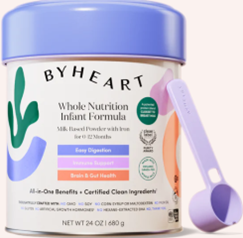
ByHeart infant formula is a common food consumed by 13 babies recently diagnosed with deadly infant botulism. Several Federal agencies as well as state and local partners are investigating this outbreak. Unfortunately, this tragic number could rise as more information becomes available.
Where have these illnesses taken place? What products are being recalled? What are the symptoms of infant botulism?
Here’s what we know about the ByHeart infant formula botulism outbreak so far.
The outbreak investigation and root cause of this infant botulism outbreak is ongoing. However, recent evidence cannot rule out the possibility that the contamination may have affected all ByHeart formula products. As such, the criteria for inclusion into the outbreak has been widened to illnesses dating back to the product’s release in March 2022.
An additional 10 prior cases occurring between December 2023 and July 2025 have been added, bringing the total case count to 51 infants. Illnesses started on dates ranging from December 24, 2023 to December 1, 2025. All requiring hospitalization.
Two more infant botulism cases have been linked to this outbreak. A total of 39 babies with infant botulism were fed By Heart Whole Nutrition infant formula prior to becoming sick. All 39 infants have been hospitalized.
The FDA is still receiving reports that recalled product is still being found on store shelves at Walmart, Target, Kroger, Acme, and Shaw’s despite all ByHeart formula products being recalled. Parents and caregivers should examine packages and check for recalls prior to feeding their child.
The case count continues to rise. As of November 26, 2025 there have been at least 37 infants associated with this infant botulism outbreak linked to ByHeart Whole Nutrition infant formula. Various lots of the product are reported. All 37 infants have been hospitalized with illness onset dates recorded between August 9, 2025 and November 19, 2025.
So far, there have been cases reported in Arizona, California, Idaho, Illinois, Kentucky, Massachusetts, Maine, Missouri, Minnesota, North Carolina, New Jersey, Oregon, Pennsylvania, Rhode Island, Texas, Washington, and Wisconsin.
The case count has risen to 31 infants. All 31 were hospitalized.
FDA has received reports that recalled product continues to remain on some retailer shelves, despite the recall notice.
Additional cases of infant botulism have been added to the ByHeart infant formula outbreak.
So far, 23 infants have been hospitalized with illness onset between August 9 to November 11.
There are now at least three cases in Arizona, California, and Texas. Illinois, Minnesota, North Carolina, and Oregon each have at least three cases. All other impacted states have at least one hospitalized newborn.
Will will continue to update as more information becomes available.
More cases of infant botulism have been connected to ByHeart infant formula and the recall has been expanded.
So far, 15 infants have been hospitalized with illness onset between August 9 to November 10, 2025. The two additional infants are from Kentucky and North Carolina.
Based on the number of ill infants and identification of additional lots, along with preliminary positive sample collected, all lots of ByHeart Infant Formula have been recalled. This includes “all unexpired lots of formula cans and single-serve ‘anywhere’ sticks.”
We will continue to update as more information becomes available.
The California Department of Public Health (CDPH) Infant Botulism Treatment and Prevention Program (IBTPP) has received an increased number of reported cases of botulism type A infections between August 2025 and November 2025. At least 13 of these cases reported consuming ByHeart-brand powdered infant formula.
All 13 babies have been hospitalized for their illness.
So far, cases span 10 states. Including Arizona (1 case), California (2 cases), Illinois (2 cases), Minnesota (1 case), New Jersey (1 case), Oregon (1 case), Pennsylvania (1 case), Rhode Island (1 case), Texas (2 cases), and Washington (1 case).
Additional cases have pending laboratory confirmation.
No deaths have been reported at this time.
Several state health departments have collected samples from leftover containers of ByHeart infant formula.
This testing is in progress. Unfortunately, the results are not yet available. They are, however, “expected in the coming weeks.”
The U.S. Food and Drug Administration (FDA) say they have been in contact with ByHeart, Inc., the supplier of the common ByHeart infant formula. The firm has been advised to conduct a voluntary recall “due to the number of cases, severity of illness, and the strong epidemiological signal.”
In response to these findings, ByHeart, Inc agreed to initiate a recall for two lots of their ByHeart Whole Nutrition Infant Formula.
Infant Formula Recall
ByHeart Whole Nutrition Infant Formula
Lot: 206VABP/251261P2
Lot: 206VABP/251131P2
The two lots that sick infants have been reported to consume include Lot: 206VABP/251261P2 and Lot: 206VABP/251131P2. Affected products were sold online and distributed nationwide to major retailers.
The FDA’s ongoing investigation is working to determine where the contamination took place and if additional product may have been impacted.
According to the FDA, ByHeart Whole Nutrition Infant Formula only makes up an estimated less than 1% of all infant formula sold in the United States. There are no expected shortage concerns of infant formula for parents and caregivers at this time.
Infant botulism is an intestinal illness. This disease develops when spores of the bacterium Clostridium botulinum, or a related species, have been swallowed.
The spores can temporarily colonize the infant’s large intestine. These types of bacteria produce a type of neurotoxin called botulinum neurotoxin. This neurotoxin can have serious or even fatal consequences if not treated quickly.
In people over a year, botulism is caused by consuming food already contaminated with the toxin. People get sick from consuming the toxin, not the bacteria. When infection happens in those under one year old, the bacteria can actually make the toxin while still inside the body. Leading to slow onset, as opposed to rapid symptoms observed in older children and adults.
This is because the natural bacteria in a health digestive tract prevent botulism-causing bacteria from lingering in the intestines. The undeveloped gut microbiome of those under one year is not strong enough to do this. Because the infection is different, symptoms often appear differently too.
In fact, for those under one year old, the body is affected in different ways.
It is a “slow form of paralysis in infants,” says The Cleveland Clinic. It comes one very slowly. Gradually becoming worse over time. This makes it difficult to notice early. However, early medical care can make a huge difference in the outcome.
For a person who does not yet have the ability to tell you what’s going on or answer questions, this complicates things. Adding to that, babies with infant botulism are also alert, have no fever, and appear otherwise healthy.
Babies with infant botulism may experience any combination of symptoms associated with the illness.
Some of the common symptoms may include:
According to the U.S. Centers for Disease Control and Prevention (CDC) “symptoms of infant botulism, which is diagnosed clinically, can take as long as several weeks to develop following formula ingestion.”
Stool or enema specimens are collected to diagnose infant botulism. This testing is usually performed by the state public health laboratory or the Centers for Disease Control and Prevention if the state laboratory does not have testing capabilities.
These specialized laboratory tests often take days to complete. However, clinical symptoms are sufficient to begin treatment.
Infant botulism is treated by BabyBIG®, a human antitoxin. According to policy, the state health department should be notified when BabyBIG infusion is complete. This is also a reportable illness to the CDC. So this organization must also be notified via the National Notifiable Diseases Surveillance System.
Infant botulism should be taken very seriously. If you suspect your baby has infant botulism, there are a few things you can do to help your situation, and theirs.
Botulism can be fatal if not treated right away. If your child has consumed ByHeart infant formula, or some other infant formula, and is experiencing symptoms of infant botulism, get medical help right away!
Your physician should notify the Infant botulism treatment and Prevention Program hotline at 510-231-7600 for a case consultation. The line is available 24/7.
If possible, retain a portion of the product (carefully bagged up and labeled so it is no longer consumed). This could be useful if investigators wish to test a sample from your opened container.
Otherwise, document lot information for the product that was consumed to be used in the traceback investigation process.
If you child has been impacted by infant botulism after consuming ByHeart infant formula, or some other brand of infant formula, it is a good idea to get legal advice. A Food Poisoning Lawyer understands product contamination and product liability cases and can help you through this difficult process.
The experienced Food Poisoning Lawyers at The Lange Law Firm, PLLC are dedicated to holding food companies accountable for lapses in food safety that result in illness or injury. They have recovered millions of dollars in product liability and food poisoning cases.
They can help you too!
Call (833) 330-3663 for a free, no obligation consultation. Or fill out the online submission form, and someone will get back with you right away.
By Heather Van Tassell (contributing writer, non-lawyer)