
Protecting families from contaminated food and water
All fields are required
Protecting families from contaminated food and water
Posted in Our Blog,Outbreaks & Recalls,Salmonella on December 28, 2025
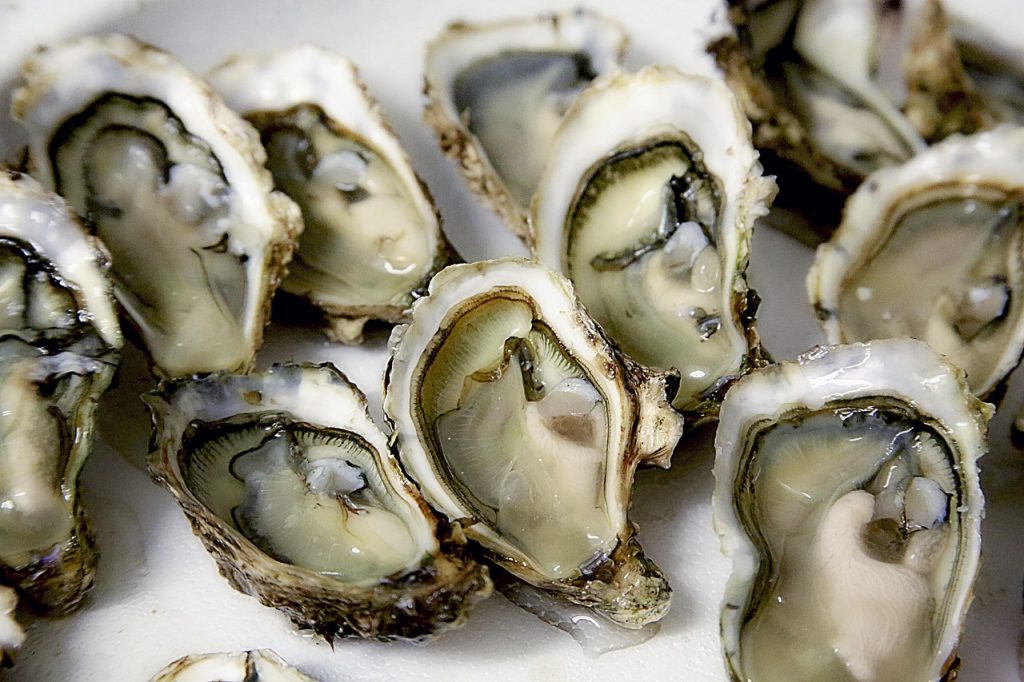
The Centers for Disease Control and Prevention (CDC) announced that there has been an outbreak involving Salmonella in raw oysters. Over 20 states have been affected and at least 20 people have been hospitalized. Even more have been sickened by these filter feeders.
How many people have been sickened? What products are impacted? How can you protect yourself?
Here’s what we know so far about Salmonella in raw oysters.
According to the CDC, as of December 23, 2025 at least 64 people have been diagnosed with Salmonella infections across 22 states. At least 20 people had illnesses serious enough to require hospitalization. No deaths have been reported in connection to this outbreak.
People started reporting illnesses around Summer. Cases have consistently been documented well into the end of the year.
Additional unreported illnesses are likely, since most people with Salmonella infections experience mild illness and therefore never seek medical treatment. Those people are never tested for Salmonella and are not included in outbreak statistics.
In fact, historically speaking, the CDC says that just one in every 30 Salmonella infections are diagnosed. A human complication that makes finding a common food source more complicated.
Based on current information, what do all of these people with Salmonella have in common?
According to the CDC, “people in this outbreak are reporting eating raw oysters.” Two-thirds of those interviewed following Salmonella diagnosis indicated consuming raw oysters prior to becoming sick.
The next logical step in the outbreak investigation, therefore, is to track down the offending product through traceback investigation and initiate a recall to prevent further illnesses.
Therein lies another problem.
As of right now, there has not been a formal recall for any brand or supplier of raw oysters.
According to the press release, “CDC and FDA [US Food and Drug Administration] are working to determine if a common source of oysters can be identified.”
Cases have been identified across the country, signifying a supplier that participates in multi-state commerce. Impacted states include: Illinois (1 case), Kentucky (1 case), Maine (1 case), Missouri (1 case), North Carolina (1 case), South Dakota (1 case), Tennessee (1 case), Maryland (1 case), California (2 cases), Connecticut (2 cases), Delaware (2 cases), Texas (2 cases), Arizona (3 cases), Colorado (3 cases), Florida (3 cases), Massachusetts (3 cases), South Carolina (3 cases), Georgia (4 cases), New Jersey (6 cases), Virgina (6 cases), New York (7 cases), and Pennsylvania (10 cases).
Raw oysters can be contaminated with germs like Salmonella any time of the year. However, the number and severity of these Salmonella cases is concerning and has warranted a joint CDC and FDA outbreak investigation.
For now, these agencies recommend prevention measures to protect yourself from Salmonella in raw oysters.
Protecting yourself from Salmonella in raw oysters (along with other germs like Vibrio, norovirus, and others commonly associated with their consumption) involves some preventative measures.
First, reduce the risk of cross-contamination. Second, cook them.
I know, I know. Raw oysters have a cult following and, in some circles, considered a delicacy. However, their risk often doesn’t outweigh the brief reward. Risks involving serious or even life-threatening illnesses. Up to and including hospitalization and death.
Reducing your risk is key. Particularly with an ongoing outbreak and a significant number of serious illnesses associated with this situation.
Like any raw seafood, germs can live not only in the meat of the product, but in the juices or drippings. Do not allow liquid from raw oysters to come into contact with other foods.
Store raw oysters in a leak proof container in the refrigerator to avoid cross-contamination with prepared or ready-to-eat foods.
Wash all contact surfaces, utensils, and your hands after coming into contact with raw oysters or its juices.
One of the most effective ways to protect yourself from Salmonella in raw oysters is to cook them, rather than eating them raw. Cooking oysters prior to eating them reduces your risk of foodborne infection. Contrary to popular belief, lemon juice, hot sauce, and drinking alcohol do not kill germs like Salmonella. Those methods of preparation do not count as cooking.
So, how do you cook oysters to prevent Salmonella infection? It depends on whether they are still in their shells or not.
Cooking oysters in their shells:
Cooking oysters outside of their shells:
Salmonella bacteria are a leading cause of foodborne illness in the United States. It is also a leading cause of hospitalizations and death linked to foodborne illnesses. So, I’d say that Salmonella can be really bad.
However, these illnesses, like most foodborne infections, occur on a spectrum. Some people do not get very sick and have mild symptoms. Others may experience more severe illness or even die from complications. This is more likely to occur in certain higher risk groups.
Certain groups of people have conditions or susceptibilities that make them more likely to become sick if exposed, and experience more severe symptoms if infected.
Those more vulnerable to Salmonella infection include:
Those more likely to experience sever symptoms include:
While most people do not need medical intervention and are not prescribed antibiotic treatment, those in the higher risk group are more likely to receive treatment.
In some cases, complications may arise from infection.
If you have recently eaten raw oysters and began feeling sick, you may have a Salmonella infection. Only specialized laboratory tests can confirm Salmonella infection. However, there are some common symptoms that you can look out for.
Salmonella symptoms may include:
Most people experience symptoms in as little as six hours and up to six days after exposure. In some cases, illness onset could be much longer.
Severity and length of illness often vary from person to person. Most people experience mild illnesses that passes quickly. Others may experience severe illness lasting weeks or even months after initial symptoms.
Symptoms generally resolve within a week (four to seven days). Though some may experience certain serious complications.
Most of the time Salmonella bacteria are limited to the intestinal tract. However, in some cases, the bacteria can breach the intestinal wall and enter the bloodstream capillaries and veins found there. When this happens, bacteria may infect the urinary tract, blood, bones, joints, and even the nervous system.
Salmonella infections should be taken very seriously. Serious, life-threatening complications may develop.
If you have become seriously ill due to Salmonella in raw oysters, it is a good idea to get advice from an experienced Salmonella Lawyer. A Salmonella lawyer can help answer questions you may have and even some that you have not thought about. They can help you get the resources you need to recover and help hold accountable those responsible for your illness.
If you have been impacted by this outbreak and wish to make a legal claim, The Lange Law Firm, PLLC has a Salmonella lawyer that can help.
The Lange Law Firm, PLLC has successfully represented cases just like yours and won millions of dollars in food poisoning and products liabilities lawsuits.
Reach out by calling (833) 330-3663 or send us an email for a free, no obligation consultation.
Don’t wait. Call today!
By: Heather Van Tassell (contributing writer, non-lawyer)