
Protecting families from contaminated food and water
All fields are required
Protecting families from contaminated food and water
Posted in Food Policy,Food Safety,Our Blog,Outbreaks & Recalls on March 26, 2026
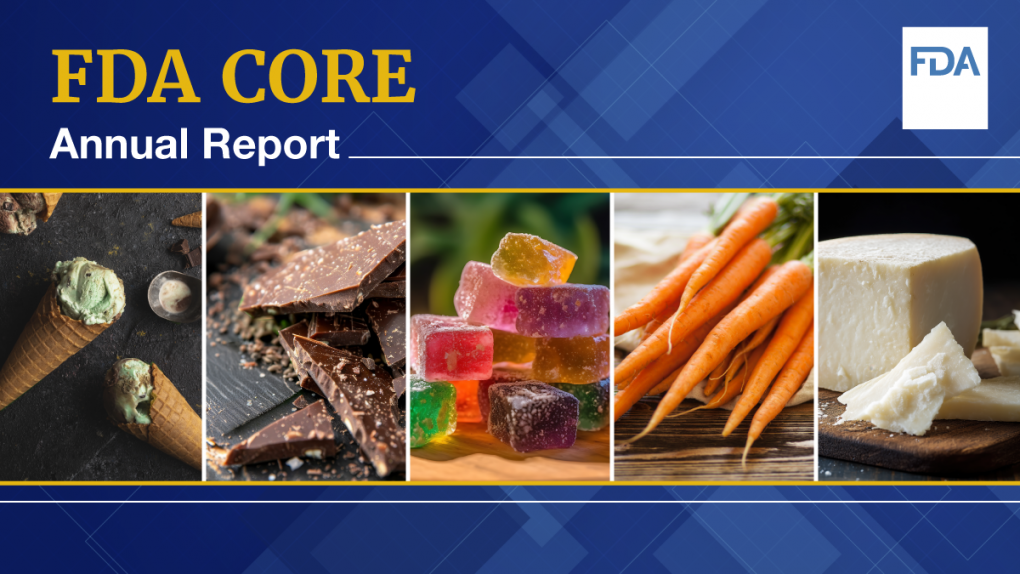
The U.S. Food and Drug Administration (FDA) just released their CORE 2024 Annual Report. The information may surprise you. Or not.
Most of the outbreaks with identifiable causes involve vegetables. But what else did they uncover?
The Office of Coordinated Outbreak Response (CORE) manages the nation’s outbreak response activities and so much more. This annual report shows a snapshot into problems in our food supply, providing an opportunity to improve our processes in an effort to make our food supply safer.
What exactly is CORE and what do they actually do? Why is this report important? Lastly, what exactly did the CORE 2024 Annual Report capture?
The CORE Network brings together experts in medicine, public health, and science to “find, stop, and prevent foodborne illness outbreaks.”
Since its inception in 2011, CORE teams have identified 959 potential outbreaks. They have responded to 234 that were potentially linked to FDA regulated food products, and identified specific food vehicles responsible for outbreaks 100 times. More than 400 public notifications originating from the organization have warned consumers about certain foods subject to public safety concern.
There are two major groups in CORE. The Signals and Surveillance Team and the Response Teams.
The Signals and Surveillance Team watches disease surveillance trends and evaluates emerging outbreaks. They collaborate with the Centers for Disease Control and Prevention (CDC), FDA field offices, and applicable state agencies. Looking at past inspection, sampling results, ingredient sourcing, and product distribution, the team gathers information about potential concerns.
If an outbreak appears to be caused by and FDA-regulated food, they pass their information on to the next team. The Response Team.
The Response Team’s job is to control and stop the outbreak. They work with FDA field offices, subject matter experts, and other partners to create and follow through with a response strategy.
That can look like investigating patient interviews, conducting inspections and sampling activities, and tracing product distribution.
They are the boots on the ground helping find the source so that a recall can be made and product removed from the marketplace before more people get sick.
You may be wondering why evaluating data from a year ago has merit. Why do we care? But believe it or not, understanding what went wrong and where our vulnerabilities lie can help improve the food supply for everyone.
For example, based on activities taking place in 2024, as of October 2024, CORE has increased their responsibilities. Enhanced activities involving food defense, traceability, and supply chain management activities have been added/updated in their scope of responsibility.
This is also the first report since the reorganization of the Program. The FDA’s Center for Food Safety and Applied Nutrition, known now as the human Foods Program, expanded CORE’s responsibilities.
In addition to detection and response activities, the groups now also manages food defense, traceability, and supply chain programs.
Adding a proactive approach to the reactive activities of the organization.
What did the 2024 Annual Report include?
How about some details! What was responsible for these outbreaks?
The CORE 2024 Annual Report revealed that most outbreaks were linked to vegetables, followed by multi-ingredient foods, and solid or semi solid dairy products.
Here’s the breakdown.
The bulk of food responsible for recalls, according to the CORE 2024 Annual Report, were vegetables. Vegetables are vulnerable to many different contamination variables. Irrigation water, fertilizers, the soil, and all of the steps in the supply chain that touch them can contribute to contamination.
Which vegetables were identified that year as a food vehicle in outbreaks?
Multi-ingredient foods were up next. The CORE 2024 Annual Report found that 20% of the identifiable food products responsible for outbreaks in 2024 were attributed to multi-ingredient foods.
Which ones?
The CORE 2024 Annual Report indicated that dairy products, more specifically solid or semi-solid dairy products made up 10% of the food vehicles identified in outbreaks.
What did we have?
The remaining food vehicles each made up 5% of the outbreaks with an identifiable source.
For the most part, when surveillance samples identify a foodborne pathogen or an outbreak is associated with a food item, the manufacturer/grower does the right thing and issues a voluntary recall. In some cases, a safety alert is announced to the public when the voluntary recall is declined or insufficient.
Additionally, other enforcement activities may be warranted. Warning letters, injunctions, and import alerts are tools the organization can use to help protect the public.
According to the CORE 2024 Annual Report, these enforcement activities were exercised several times in 2024.
On October 8, 2024, the FDA entered a “consent decree” against Rizo Lopez Foods Inc due to their part in the multistate outbreak of Listeria linked to Queso Fresco and Cotija Cheese products.
What does this mean?
“Among other requirements, the consent decree prohibits Rizo Lopez Foods from manufacturing and selling certain food products until the company complies with the Federal Food, Drug, and Cosmetic Act (FD&C), federal regulations, and other requirements.”
This action was taken in response to listeriosis cases relating to this outbreak spanning multiple years. In all, at least 26 cases were confirmed in 11 different states. At least 23 people were hospitalized. Two individuals died. Of the four people with known infections who were pregnant, one suffered a pregnancy loss.
On November 17, 2025, Bedner Growers was issued a warning letter for their part in Salmonella outbreaks in 2024 and 2025 associated with cucumbers.
Warning letters are official (and public) correspondence to a food manufacturer/grower requesting response not received or inadequate as part of the outbreak investigation corrective action process. Warning letters have a ticking deadline for response or additional enforcement action may take place.
In 2024, an outbreak associated with this farm was connected to 551 illnesses in 34 states. In 2025 another 45 people (16 hospitalized) across 18 states were infected with Salmonella linked to cucumbers from Bedner Growers.
On May 22, 2025, Milo’s Poultry Farms LLC was issued a warning letter for their part in a multi-state Salmonella Enteriditis outbreak.
During the onsite inspection, several possible contributing factors were observed. The warning letter was issued to ensure that corrective actions were successfully addressed and performed.
This warning letter was issued due to multiple positive environmental swabs, observation of eggs being handled under insanitary conditions, and the presence of pests at the facility.
An import alert was issued for American/Slicer whole cucumbers grown by Agrotato, S.A. de C.V. in Sonora, Mexico due to the potential risk of Salmonella following a multi-state outbreak.
This import alert indicated the obligation to “detention without physical examination of fresh produce that appears to have been prepared, packed or held under insanitary conditions.”
In addition to the above enforcement activities, several recalls were initiated.
Did you remember any of these major outbreaks? Were you seriously impacted by them?
The Lange Law Firm, PLLC can help! The experienced foodborne illness lawyers at The Lange Law Firm have won millions of dollars in product liability and food poisoning cases. They can help you recover lost income, medical bills, and other expenses associated with the burdens of foodborne illness.
Call (833) 330-3663 or fill out the online submission form for a free, no-obligation consultation.
If you’d like to know more about food safety topics in the news, like “FDA CORE 2024 Annual Report Reveals 55% of Identifiable Outbreak Causes Involve Vegetables,” check out the Make Food Safe Blog. We regularly update trending topics, foodborne infections in the news, recalls, and more! Stay tuned for quality information to help keep your family safe, while The Lange Law Firm, PLLC strives to Make Food Safe!
By: Heather Van Tassell (contributing writer, non-lawyer)