
Protecting families from contaminated food and water
All fields are required
Protecting families from contaminated food and water
Posted in Food Policy,Our Blog on February 12, 2026
You will likely begin seeing a “no artificial colors” claim on food product packaging soon. A recent US Food and Drug Administration (FDA) change allows food producers to make these “claims.” But what do they really mean?
On that note, why have synthetic petroleum dyes been banned from food? What will food look like when the deadlines pass?
The Make Food Safe Blog has been closely following the recent FDA ban on petroleum-based synthetic dyes. By the end of 2026, the FDA has issued a nationwide ban on these substances.
Banned dyes include:
For some of these dyes, the ban was immediate. For example, Citrus Red No. 2 and Orange B ban dates have already come to pass. Fortunately, those dyes have not been commonly used for some time. An existing mandate for Red Dye No. 3, which independently banned the synthetic dye by 2028 has been modified to join the others this year.
In the meantime, the FDA is receiving petitions for replacement dyes derived from natural sources.
For example, in May 2025 the FDA officially allowed three new approved food colors.
Galdieria Extract Blue, a replacement for Blue No. 1 and Blue No. 2, comes from a unicellular red algae called Galdieria sulphuraria.
Butterfly Pea Flower Extract, a replacement for Blue No. 1 and Blue No. 2, comes from dried petals from the butterfly pea plant and is produced through a water extraction method on the flower petals.
Calcium Phosphate, while not a replacement for a single existing synthetic dye, it will likely be used in combination with other food chemistry to achieve the desired white color. While this dye isn’t exactly “natural,” it is naturally occurring in bones and teeth.
This month, the FDA announced the approval of two more natural color options. Beetroot red and spirulina extract (an existing color with expanded approved applications).
Beetroot red can now be used in products except “infant formula or in foods for which standards of identity have been issued under the FD&C Act.” The reddish-purple liquid/powder is produced by fermenting a modified strain of the yeast Saccharomyces cerevisiae.
Spirulina extract was previously approved for many other food and beverage categories. It has now been approved for use in all foods. However, the FDA took preventative action in lowering the heavy metal specifications in the extract for lead, arsenic, and mercury as well as added a specification for cadmium to ensure only safe spirulina extract is used in human food in the United States.
The FDA continues to evaluate additional petitions for new, naturally derived, food dyes.
The FDA published a “letter to industry,” which provided notice of the FDA’s intent to exercise enforcement discretion on voluntary labeling claims.
“This is real progress,” said Health and Human Services Secretary Robert F. Kennedy Jr. “We are making it easier for companies to move away from petroleum-based synthetic colors and adopt safer, naturally derived alternatives.”
The perceived discrepancy is that despite these new dyes being derived from natural sources, they are still technically “artificial.” For example, a beetroot extract is quite different from adding beetroot or beetroot powder to a food product. The “processing” aspect to achieve the approved dye could still be categorized and interpreted as artificial.
This is the reason for the new “no artificial colors claim,” guidelines.
“We acknowledge that calling colors derived from natural sources ‘artificial’ might be confusing for consumers and a hindrance for companies to explore alternative food coloring option,” said FDA Commissioner Marty Makary, M.D., M.P.H. “We’re taking away that hindrance and making it easier for companies to use these colors in the foods our families eat every day.”
These allowances build on efforts to encourage food manufacturers to phase out the use of petroleum-based colors in food products. Allowing companies to label products with “no artificial colors,” signals to consumers the safer options. A move that may drive consumer demand and expedite the overall conversion to non-petroleum-based dyes.
All of this talk on banning synthetic dyes? But other than staining clothes, why do we really care about them?
As it turns out, these synthetic dyes do more than color our foods. On a metabolic level they have serious impact. In addition to being linked to cancer, infertility, and other health problems, these dyes have an impact on neurobehavioral aspects. Especially in children.
They have been linked to hyperactivity, impulsiveness, inattention, and attention deficit hyperactivity disorder (ADHD).
Removing these harmful chemicals from our food supply seems like a no-brainer. Yet despite these chemicals already being banned in other countries, they continue to persist in ours. Despite the same brands offering similar products to other countries without these dyes.
If you want to look at what food would look like without these synthetic dyes, a brief Google search for foreign products made by your favorite food brands will give you a glimpse.
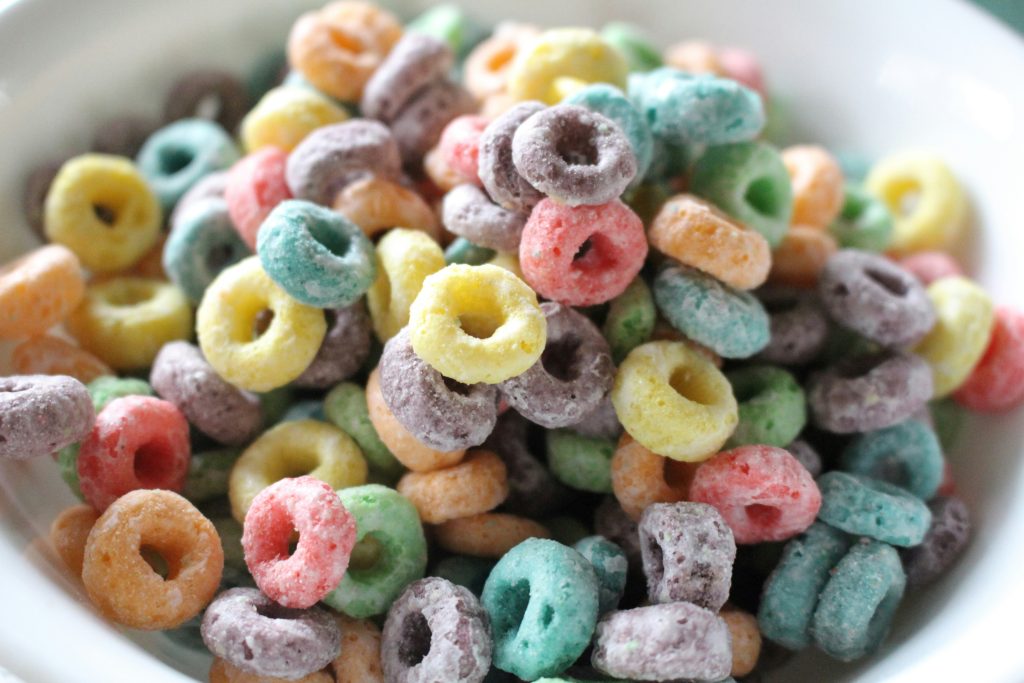
Cereals look more pastel than brightly colored. Chips do not have green and blue specs or covered in orange dust. They still taste the same. Sans color. But they are better for our bodies.
It may take some getting used to. But I suspect it will not take too much time.
For now, you may be able to see a “no artificial colors” claim soon on packaging for those who have managed to change before the ban deadline.
If you’d like to know more about food safety topics in the news, like “FDA Updates ‘No Artificial Colors’ Claim and Adds Two New Natural Source Dyes,” check out the Make Food Safe Blog. We regularly update trending topics, foodborne infections in the news, recalls, and more! Stay tuned for quality information to help keep your family safe, while The Lange Law Firm, PLLC strives to Make Food Safe!
By: Heather Van Tassell (contributing writer, non-lawyer)