
Protecting families from contaminated food and water
All fields are required
Protecting families from contaminated food and water
Posted in Food Policy,Our Blog on January 20, 2026
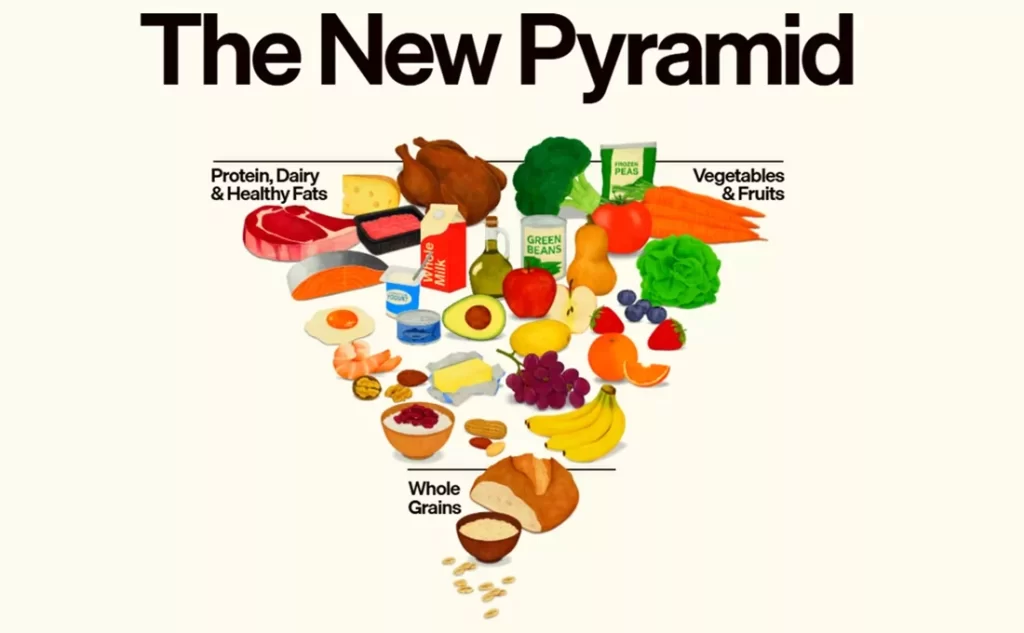
New HHS Dietary Guidelines have been published this month, with a whole new take on “Dietary Guidelines for Americans.”
Presented by U.S. Department of Health and Human Services (HHS) Secretary Robert F. Kennedy, Jr. and U.S. Department of Agriculture (USDA) Secretary Brooke L. Rollins, this dietary revamp even includes a different shape.
Or rather, an inversion of the food pyramid we grew up with and a slight modification to the brief vertical depiction that evolved from it.
What’s changed? What is the focus? How will it impact your eating choices?
What has always been known as the food pyramid, in its usual shape, has been turned upside down.
Instead of an emphasis on what you should be minimizing (the smaller sections on top), there appears to be a focus on what you should be prioritizing.
A few other selections have shifted locations. Additionally, the image, while colorful and updated, it lacks specific serving suggestions in a daily diet. However, the accompanying PDF goes into greater detail. So, the information is not entirely absent. Things are just in different places.
On the top left half of the inverted pyramid you have protein (in the form of meat, poultry, fish, and nuts), dairy (whole fat milk, yogurt, and cheese are depicted), and healthy fats (butter, avocado, and what might be olive oil are shown).
On the other side of the top you have vegetables and fruits. Listed in that order. Possibly to emphasize vegetables over fruit. Images of butternut squash, carrots, and broccoli are depicted. Canned green beans and peas are also included. Fruits making an appearance include bananas, oranges, and berries. Even mangos, apples, and grapes.
Most of which appears on the previous food pyramid.
So, what has actually changed?
In a letter to the public from the two Secretaries, we are told, “American households must prioritize diets build on whole, nutrient-dense foods – protein, dairy, vegetables, fruits, healthy fats, and whole grains.”
The bulk of the new HHS dietary guidelines involve protein, dairy, healthy fats, fruits, and vegetables. On the previous version, bread, cereal, rice, and grains were a dietary priority. In fact, the previous dietary guidelines indicated that the average person consumes 6 to 11 servings of these healthy carbohydrates to the 2 to 3 servings of protein.
New protein serving suggestions look a bit different. You are going to need to do a little math for it. The protein serving goal is between 1.2 and 1.6 grams of protein per kilogram of body weight per day, “adjusting as needed based on your individual caloric requirements,” of course.
The new HHS dietary guidelines have an emphasis on what they call “real food.”
What this really means is a reduction in “highly processed foods” as well as “refined carbohydrates, added sugars, excess sodium, unhealthy fats, and chemical additives.”
Ultra-processed foods are more common than you might think. In fact, much of the American diet involves ultra-processed foods. It is just that they are often presented as a whole food.
What am I talking about?
In the most basic definition, an ultra-processed food in its final form contains no recognizable individual ingredient. Sliced bread, hot dogs, and lunch meat. Even jerky. Snacks like candy, chips, crackers, and cookies. Boxed macaroni and cheese. Certain ready-to-eat refrigerated meals or frozen dinners.
They often contain chemical-based preservatives, emulsifiers or sweeteners.
Hello hydrogenated oils and high fructose corn syrup!
If those ingredients are on the label, the food is likely considered “highly processed.”
These foods, along with added sugars, should be avoided.
In the previous food pyramid, “sweets” shared the tippy top of the triangle with fats and oils. The new rendition of the HHS dietary guidelines emphasizes removing “added sugars” from the diet. In fact, you do not see sugar anywhere on the new food “pyramid.”
No sugar is depicted at all.
Added sugars are different from “naturally occurring sugars” that are found in many foods. Fruits, vegetables, and even milk contain naturally occurring sugars. It is the “added sugar” and non-nutritive sweeteners the new dietary guidelines shun. According to these recommendations, meals should contain less than 10 grams of added sugar.
Sugars often hide in plain sight on labels. Often using the word “syrup” or words that end in “-ose.” Some of the listed examples include: “high fructose corn syrup, agave syrup, corn syrup, rice syrup, fructose, glucose, dextrose, sucrose, cane sugar, beet sugar, turbinado sugar, maltose, lactose, fruit juice concentrate, honey, and molasses.” Some of the non-nutritive sweeteners on the market include aspartame, sucralose, saccharin, xylitol, and acesulfame K.
The new HHS guidelines do not have a straightforward limitation on sodium. This is also not present on the inverted pyramid. Sodium recommendations are found in the accompanying PDF.
In general, people over the age of 14 are advised to consume less than 2,300 mg per day. For those under 14, there is a sliding scale that varies by age.
For example, a child aged one to three should consume less than 1,200 mg per day. Kids four to eight years old can increase slightly to less than 1,500 per day. Children nine to 13 should consume less than 1,800 mg sodium per day.
All people should avoid highly processed foods that are high in sodium. But that seems redundant, as highly processed foods are already not recommended.
There is a ton of controversy surrounding the Make America Healthy Again movement. As always, politics aside, there are tons of information out there in our Internet-connected world on healthy diets, fad diets, and harmful foods.
Information changes at the speed of… Well… Information.
We’ve been exposed to the Adkins diet, the grapefruit diet, and the Special K diet. More recently we have been presented with the paleo diet, the keto diet, whole 30, and even carnivore.
At one point, butter was bad and margarine was good. Now seed oils and artificial fats have taken a back seat to real butter.
In moderation of course. Always in moderation.
Don’t get me started on eggs. Those have come and went out of style so fast it can give you whiplash. I believe the current median opinion is that egg whites are better for you.
Until they aren’t.
It is difficult to keep up. But somehow, we must.
If you’d like to know more about food safety topics in the news, like “New HHS Dietary Guidelines Published This Month,” check out the Make Food Safe Blog. We regularly update trending topics, foodborne infections in the news, recalls, and more! Stay tuned for quality information to help keep your family safe, while The Lange Law Firm, PLLC strives to Make Food Safe!
By: Heather Van Tassell (contributing writer, non-lawyer)