
Protecting families from contaminated food and water
All fields are required
Protecting families from contaminated food and water
Posted in Food Safety,Our Blog on April 9, 2026
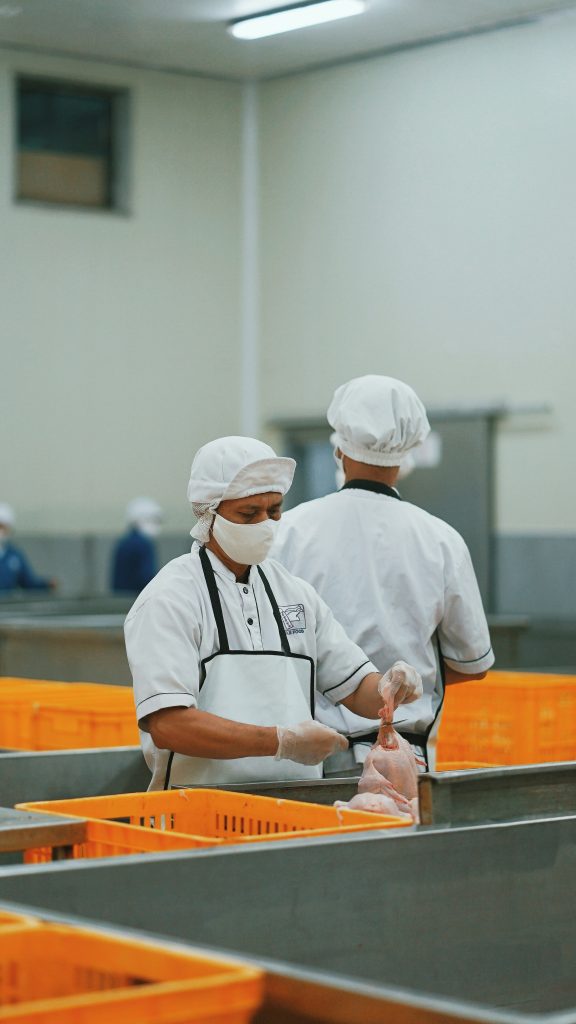
Did you know that there are rules for poultry processing involving the number of birds per minute on processing lines? The United States Department of Agriculture (USDA) Food Safety Inspection Service (FSIS) is in charge of this protocol.
The new proposed regulation would allow young chicken slaughter establishments to increase their maximum line speed from an allowable 140 birds per minute to 175 birds per minute.
This doesn’t mean that poultry processing facilities are required to increase their speed. Certain food safety requirements are still necessary to maintain. But this potential increase in line speed is meant to reduce bottlenecks at that production step, which would in turn decrease costs and presumably prices at the grocery store.
What exactly does this mean, what are the potential risks associated with this increased speed, and how soon (if passed) could these new allowable production speeds begin operation?
Let’s explore!
The newly proposed poultry processing speed regulation called “Maximum Line Speed Rates for Young Chicken and Turkey Establishments Operating under the New Poultry Inspection System” or Docket (FSIS-2025-0012) was made available for comments on February 19, 2026.
Public comment submission is available until April 20, 2026.
In summary:
“FSIS is proposing to amend the regulations to: allow young chicken establishments operating under the New Poultry Inspection System (NPIS) to operate at line speeds up to 175 birds per minute (bpm); increase the maximum line speed prescribed for turkey establishments operating under the NPIS from 55 bpm to 60 bpm; define “maximum line speed” as the time it takes for an inspector to effectively perform online carcass inspection procedures; clarify when FSIS may direct establishments to operate at a reduced line speed; and remove requirements for NPIS establishments to submit to FSIS annual attestations on worker safety programs. The proposed amendments would allow poultry establishments to slaughter birds more efficiently while continuing to ensure food safety and effective online carcass inspection.”
This did not come out of nowhere. Recent trials have been performed to test the safety of this proposed maximum line speed. In fact, waivers were issued for some processing facilities while outcomes were monitored.
How did that go?
In 2014, the FSIS issued 20 poultry establishments who participated in the pilot study to continue to operate at line speeds of up to 175 birds per minute. These facilities, through their observation and testing results, “demonstrated that they were capable of consistently producing safe, wholesome, and unadulterated product and meeting pathogen reduction performance standards.”
These facilities were allowed to continue at that production pace, as they have proven they were capable of doing so.
Now that it was understood that the 175 birds per minute poultry processing speed (for young chickens) was feasible, FSIS began considering requests from other poultry processing establishments to do the same.
In 2018, FSIS considered granting additional waivers to poultry processing facilities to increase their line speed.
This was another opportunity for the agency to gather data.
The waiver was not granted to everyone. The poultry processing establishment must meet certain criteria. Things like their inspection ratings, Salmonella prevention, and other key factors.
Additionally, these establishments must undergo ongoing verification of their process control, food safety, and Salmonella testing results.
This data was collated into additional study data from 2018 to 2019, where the outcomes of these facilities were compared to those working under the existing 140 birds per minute line speed.
By March 2020 FSIS stopped accepting new waiver requests. Sufficient data was collected and the agency was able to move forward to the rulemaking phase of the project.
However, pushback against the proposed line speed change snagged regulatory changes from moving forward.
In July 2022, FSIS needed to justify waivers for processing line speed. The organization requested those with waivers to submit monthly worker safety data, participate in on-site visits along with surveys and interviews, as well as measurements of ergonomic exposures.
the study found that “increased evisceration line speeds are not associated with increased risk of musculoskeletal disorder.”
As such, FSIS is wanting to amend the current regulations, allowing young chicken establishments to operate at increased maximum line speeds of up to 175 birds per minute without the monthly check-ins. Since this extensive oversight has been deemed unnecessary, removing these constraints would reduce the economic burden within the organization.
In addition to the increased line speed for young chicken production, turkey production has also been considered for a maximum line speed adjustment.
Currently, turkey establishments have a maximum line speed of 55 birds per minute. proposed changes would allow turkey slaughter establishments to increase their maximum line speed to 60 birds per minute.
Regulators have several concerns about the risks associated with increased poultry processing line speeds. Many have been addressed in pilot studies and corresponding data. But there ae still concerns.
In addition to the increased risk of microbial contamination from removing intestinal organs from the bird efficiently, other microbial contamination concerns are possible.
For example, the more birds that make their way across processing equipment between decontamination, the higher the probability for equipment to become contaminated. Additionally, more poultry products could be potentially exposed during a processing period, increasing the number of contaminated products reaching the public.
Microbial surveillance testing is necessary to ensure that products released from the poultry processing facility is free from adulteration.
Another concern surrounding increasing the poultry processing line speed involves potential injury to employees.
While a good bit of the process at most large plants, especially those that can keep up with 175 birds per minute, human movement and interaction is still required. It is this human interaction that is concerning. Potential musculoskeletal injury.
Industry statements find the proposed regulatory change favorable. Increased line speeds increases the number of products running through the plant each day. This reduces production costs, which can in turn reduce prices to the consumer.
I spent some time looking at the comment section to see what the public had to say about this. Overwhelmingly, the public opposes this change. For various reasons.
As with any animal processing facility regulation, some opposed the industry altogether. Citing animal rights and cruelty.
Others who opposed the change in regulations were concerned about food safety. Increased risk of fecal contamination, bone fragments in meat, and such.
Some even worried about worker-related injuries and musculoskeletal issues that could arise from the increased production speed.
I did not read all 3,000+ comments. However, while clicking through various comments since the topic made it to the docket for comments, I did not find a comment that did not oppose it. While that does not mean that every comment opposed it. It seems a majority does.
There are a few weeks left for public comment on this docket. Once assessed, along with other contributing data, those in charge of the regulation may make a decision.
Will this decision be made right away?
Unlikely.
It is still a hot button topic, and these often sit on a desk for quite some time.
In the meantime, how do you feel about the proposed increased processing line speed limits?
If you’d like to know more about food safety topics in the news, like “Proposed Changes to Poultry Processing Speeds Has Mixed Feedback,” check out the Make Food Safe Blog. We regularly update trending topics, foodborne infections in the news, recalls, and more! Stay tuned for quality information to help keep your family safe, while The Lange Law Firm, PLLC strives to Make Food Safe!
By: Heather Van Tassell (contributing writer, non-lawyer)