
Protecting families from contaminated food and water
All fields are required
Protecting families from contaminated food and water
Posted in Food Policy,Our Blog on June 11, 2025
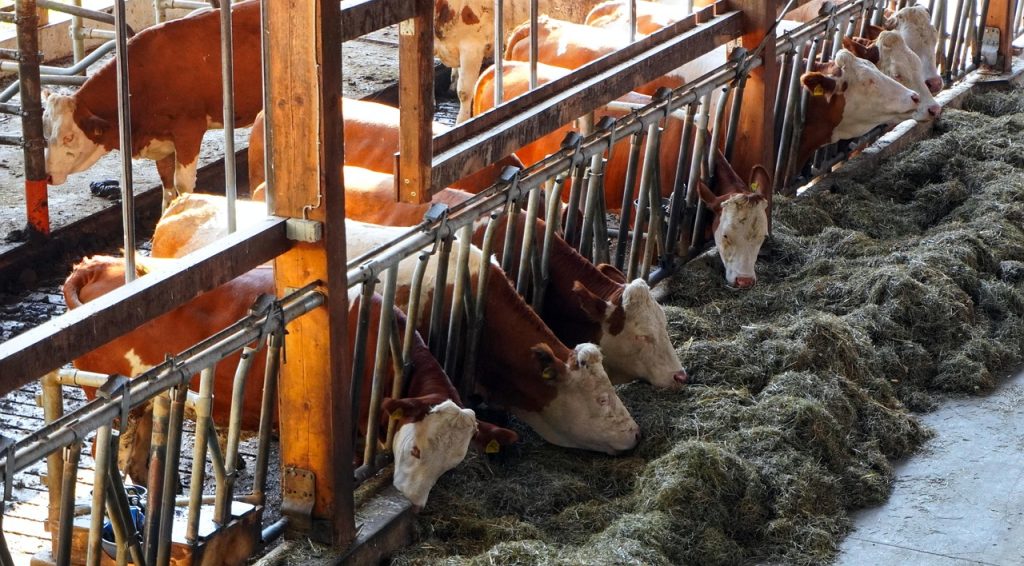
Want nitrogen-free water? That might not be an option for the Minnesota water supply right now. Reports indicate that the already high amounts of nitrogen from livestock operations in 2020 drinking water analyses have raised even higher.
This increased concentration of nitrogen in the Minnesota water supply can have significant health impacts to residents.
Here’s what we know about the recent report on the health risk of Minnesota’s feed lot contamination and what can be done about the situation.
Minnesota is known as a huge ranching state. There are thousands of livestock operations throughout the state. These cattle, hog, and poultry facilities produce a lot of waste.
What goes in must come out, as they say.
But how much poop do these operations really produce?
A 2024 report found that 23,503 cattle, hog, and poultry production facilities produced nearly 49 million tons of manure.
Nearly 49 Million Tons of Manure Produced by Minnesota Feed Lots in 2024!
When you break that down, the amount of waste generated is around 8.5 tons of manure for every one Minnesotan that year.
Animals aren’t just walking around on all of that waste. If they did, it would create a different type of contamination situation. Feed lots are contained animal areas, as opposed to open fields with plentiful space that can handle the organic nature of animal waste.
These feed lots must gather up their waste, often depositing it into a holding area before it is shipped out of the operation’s facility.
But where does it go from there?
Giant cow poop piles reaching to the sky?
Not exactly. This waste isn’t entirely wasteful. It is packed with nitrogen and phosphorous beneficial to many commercial crops. As a result, these feed lot facilities often sell their waste to nearby farms as fertilizer.
A win-win situation, right?
Unfortunately, it isn’t that simple.
The sheer quantity of manure in these areas pose a huge health risk, as high concentrations of that beneficial nitrogen and phosphorous for crops make its way into the Minnesota water supply. Where, unfortunately, humans don’t require it.
In addition to leaching into the soil at the feed lot containment areas, when applied to farm fields, additional water contamination opportunities occur.
Heavy rains and even irrigation activities wash or leach nitrogen and phosphorus into drainage systems that empty into streams located nearby and eventually into the Minnesota water supply and recreational water.
“The combination of commercial fertilizer and manure from Minnesota’s livestock production is overloading crop fields, creating a public health risk,” said Environmental Working Group Senion GIS Analyst and report author Ethan Bahe.
A problem that can continue to escalate the concentrations of nitrogen and phosphorus that will contaminate recreational and drinking water.
When it comes to nitrogen in water, less is certainly much better than more. In fact, there are serious health risks and safety concerns when nitrogen concentrations are too high.
In water, nitrogen has no smell or taste, making it undetectable to the human senses when in water. Adding to the public health concern.
The Environmental Protection Agency (EPA) has established a maximum contaminant level for nitrate in drinking water at 10mg/L. Primarily due to the concern over methemoglobinemia (Blue Baby Syndrome) observed in infants when exposed to too much nitrate, a form of nitrogen.
There are many serious health concerns from too much nitrogen in drinking water.
The health concern that often gets the most attention is the methemoglobinemia or Blue Baby Syndrome mentioned above. The name of this awful condition comes from the blue color imparted on the child’s skin due to not having enough oxygen in the blood being transported to the body’s tissues.
This can happen when nitrate levels exceed 10 mg/L, and the reason for the EPA limit.
Other problems may include increased risk of birth defects like spina bifida, limb deficiencies, and cleft palate when exposed prenatally. When the mom is exposed to nitrogen-contaminated water, the fetus is also exposed.
Cancer is another concern when it comes to nitrogen in the Minnesota water supply.
The International Agency for Research on Cancer (IARC) has classified nitrate in food and water as “probably carcinogenic to humans.”
Some studies have found a correlation between nitrate in drinking water and certain cancers. Even at half the maximum contamination level, when consumed over long periods of time.
Colorectal, thyroid, ovary, and kidney cancer have been associated with this type of long-term exposure.
While reverse osmosis, ion exchange, and distillation can remove nitrate from water, these aren’t often readily available for home use. Your Brita filter, refrigerator filter, or even boiling water activities are not sufficient for removing this contaminant.
Filters and boiling will not remove nitrogen from water.
With limited options for Minnesota residents, what is being done to protect their water supply, and will it be successful long-term?
The Environmental Working Group, a consumer advocacy group, believes certain reforms could help reduce nitrogen in the Minnesota water supply and protect residents.
Some of the proposed reforms associated with the Environmental Quality Incentives Program(EQIP) that helps cover the conservation costs of farms to improve impact on the environment could be tweaked to achieve more impact for more farms.
The Environmental Working Groups Suggests the following reforms:
At the state level, the Environmental Working Group suggests additional reforms on regulating animal feedlot operations to reduce water pollution with animal manure.
One includes requiring large, permitted facilities to monitor subsurface discharges to monitor potential nitrate in ground water. This is an important step, because there is no way to monitor these operations in that way right now.
Also, facilities with animal units between 750 and 999 animals still fall under the 1,000-animal threshold. Despite producing a significant amount of manure. These operations should be required to get a State Disposal System permit, to keep them on the state’s radar.
The Minnesota water supply is the subject of this blog post and Environmental Working Group report. But other states with concentrated animal feedlot operations are likely at similar risk.
These operations are a vital part of our food supply. But certain tweaks can help make their operations safer for their fellow residents.
Have you ever thought about nitrogen in your drinking water? Will knowing this information impact your future drinking water concerns?
If you’d like to know more about food safety topics in the news, like “Is the Minnesota Water Supply Safe? Feed Lot Manure Poses Health Risk!,” check out the Make Food Safe Blog. We regularly update trending topics, foodborne infections in the news, recalls, and more! Stay tuned for quality information to help keep your family safe, while The Lange Law Firm, PLLC strives to Make Food Safe!
By: Heather Van Tassell (contributing writer, non-lawyer)