
Protecting families from contaminated food and water
All fields are required
Protecting families from contaminated food and water
Posted in Our Blog on June 14, 2026
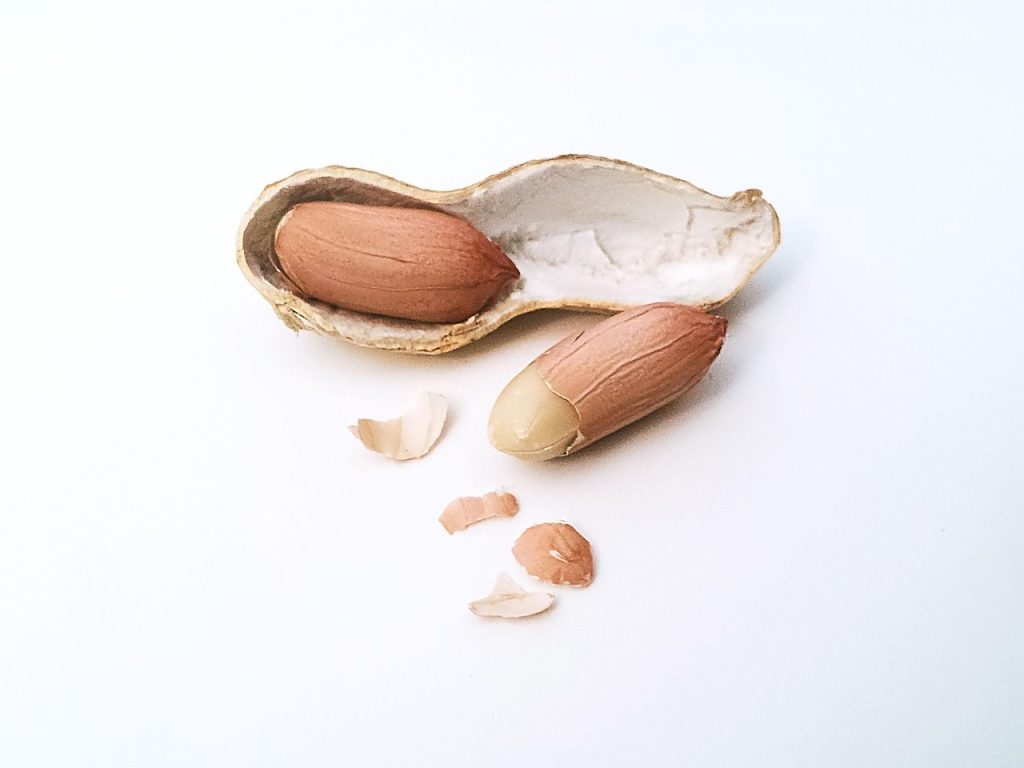
Posts about a peanut allergy vaccine have been making their way across the Internet. Unfortunately, despite appearing legitimate and even providing a reference, it just isn’t true. The purported study source, McMaster University, has issued a statement to help clear up any confusion on the matter.
What do we know about this supposed peanut allergy vaccine, what is really true about this situation, and how do you know if information you find on the Internet is real?
You may have seen it floating around the Internet recently. A post about a research study touting the effectiveness of a recently trialed peanut allergy vaccine claiming to cure peanut allergies in as little as four doses.
You may have seen it:
“A groundbreaking medical achievement from McMaster University, Canada, has brought hope to millions worldwide an mRNA vaccine that eliminates peanut allergies in just four injections. Using the same messenger RNA technology pioneered during the COVID-19 pandemic, this treatment retrains immune cells to see peanut proteins as harmless rather than threats.
In a clinical trial of 120 patients with severe peanut allergies, 89% developed full tolerance after only three months of treatment, while others showed reduced sensitivity. None experienced anaphylaxis a first in allergy medicine. The results are life-changing: people once terrified by microscopic traces of peanuts can now enjoy food freely, even peanut butter again without fear.
Unlike traditional desensitization therapies that take years, this mRNA approach works rapidly and appears to provide long-term immunity, lasting more than two years so far. Researchers are already adapting it for shellfish, milk, egg, and tree-nut allergies. If approved by 2026, it could end the lifelong struggle of food allergies altogether a quiet revolution in modern medicine, and proof that science can turn fear into freedom.
Reference:
McMaster University Medical Centre. (2025). mRNA Immunotherapy for Elimination of Peanut Allergy. Journal of Allergy and Clinical Immunology.”
These words, accompanied by a picture and the title, “No More Epipens, No More Panic. Canada’s Peanut Allergy Vaccine Reprograms Immunity in Four Doses, Changing Millions of Live.”
Sounds great, doesn’t it?
If only it was real…
According to Food Allergy Canada, an investigation into the viral post of the “imminently available” peanut allergy vaccine has revealed it to be AI/Bot-generated.
To clear things up, McMaster University issued a statement:
“A post generated by AI incorrectly suggested that an mRNA vaccine for food allergy was developed at McMaster. The publication referenced in the post does not exist. Generative AI may be mixing our long history of advancing allergy research with other publicly available scientific concepts. We do have many ongoing studies that aim to better understand how to dismantle food allergy, prevent it, develop next-generation therapies, and improve its management.
We are working diligently with a wide array of national and international partners to have the largest impact possible on food allergy, and we will continue working until a cure is found. We, through our institution and peer-reviewed publications, make official announcements of our advances and breakthroughs.
Dr. Susan Waserman MSc MDCM FRCPC, Manel Jordana MD PhD, Joshua Koenig PhD, Dr. Derek Chu MD, PhD, FRCPC.”
Allergies are complicated. Even food allergies. Could we see a peanut allergy vaccine in the future?
Possibly…
Currently, McMaster scientists are working on another therapy option to disrupt food allergy activation. The current study had identified proteins that act as “signaling molecules” Blocking those molecules has shown effectiveness at stopping the production of IgE, a type of antibody that often mistakes harmless molecules (like those found in pollen or peanuts) as harmful and attacks it. Thus generating an unwanted immune response, up to and including anaphylaxis.
This technology is a therapy/treatment. Not a vaccine.
It also has not made it to the commercial stage yet. This technology must still undergo vigorous clinical trials. A step that is still being performed.
Study authors are hopeful that this will become an option for peanut allergy sufferers soon, as this allergy-blocking antibody treatment has already been tested for use in other similar afflictions. Such as asthma, eczema, and nasal polyps. Regeneron, the company currently using the technology, wants to expand its use to food allergies.
The information seemed legitimate. The source appeared real. It was posted on various platforms from many reputable sources.
But it wasn’t real.
A few things stuck out to me when reading the original wording in the post. While the tell-tale “em dash” was not used in the content, some strange grammar was present. Though, I would like to point out that I have always been a fan of the notorious em dash, but have removed it from my writing style for fear I would be confused with a robot. I promise. I am not a robot.
But I digress…
Certain missing punctuation or wording, like “none experienced anaphylaxis a first in allergy medicine” and “it could end the lifelong struggle of food allergies altogether a quiet revolution in modern medicine.” However, this could be mistakes in editing and not overtly obvious to a casual reader.
So, how do you know what is real and what isn’t?
That is the ultimate question in the age of AI and the Internet, now isn’t it. Unfortunately, there is no real answer to this question. Personally, if it is something that is important to me, I look for the original source. In this case, the scientific journal article. In this case, it doesn’t exist.
However, for the typical social media scroller, you see something that catches your eye and move on. Perhaps it comes up in “watercooler” conversation later. Or you share it with someone you know that might be interested in it. And the misinformation unintentionally spreads.
It happens every day.
In the age of AI, we have to be vigilant on our information sources and hope that we can believe what we see. Even before AI was so much a part of our lives, when Internet access was in its early stages, a teacher told me, “don’t believe what you read on the internet.”
The statement stands true. It now comes down to: trust but verify.
If you’d like to know more about food safety topics in the news, like “A Peanut Allergy Vaccine May have Been an AI Generated Post,” check out the Make Food Safe Blog. We regularly update trending topics, foodborne infections in the news, recalls, and more! Stay tuned for quality information to help keep your family safe, while The Lange Law Firm, PLLC strives to Make Food Safe!
By: Heather Van Tassell (contributing writer, non-lawyer)