
Protecting families from contaminated food and water
All fields are required
Protecting families from contaminated food and water
Posted in Legionella,Legionnaire's disease,Our Blog,Outbreaks & Recalls on April 21, 2026
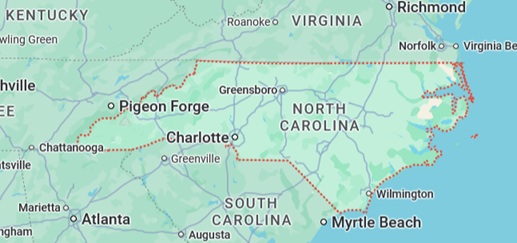
Legionnaires’ disease in North Carolina has shown a marked increase over the past few years, says North Carolina Department of Health and Human Services in a recent press release.
On April 17, 2026, the North Carolina Department of Health and Human Services issued a press release and notification on their social media accounts in both English and Spanish in response to findings involving an increase in Legionnaires’ disease cases. Both in the state and “globally.”
What prompted this announcement? What is Legionnaires’ disease and how is it spread? Who should worry about Legionnaires’ disease? What should you do if you get sick?
Follow along to find out!
Cases of Legionnaires’ disease in North Carolina have increased over recent years. Reports show North Carolina had 201 cases of Legionnaires’ disease in 2024. In 2025, that number rose to 310.
While the number of cases reported in 2026 has not yet been released, the agency would unlikely announce situation if the trend was not moving in the same direction.
What exactly is Legionnaires’ disease anyway?
Legionnaires’ disease is caused by inhaling microscopic Legionella bacteria.
While these bacteria are naturally occurring is fresh water sources (lakes, streams, rivers, etc.), it becomes a big problem when they make their way into building water systems.
If these bacteria are allowed to grow in these man-made water systems, people can become sick. Some may die.
According to the Center for Disease Control and Prevention (CDC), 1 in 20 people exposed to Legionella bacteria will become sick. Rates of illness are high. And so is mortality rate. An unfortunate 1 in 10 will die from their infection. The mortality rate increases further if the illness is acquired in a medical facility. Statistics show that 25% of those infections end in death.
Cooling towers are a significant source of Legionnaires’ disease. But there are other sources.
There are several common sources of Legionnaires’ disease. It all starts with a small amount of Legionella bacterial contamination. From there, it can grow into a huge problem. Infection spreads in places where bacteria can become a mist. When people breathe in those aerosolized droplets containing those germs, they make their way into the lungs and cause infection.
Some of the common sources of Legionella bacteria include:
Unlike most other respiratory illnesses, Legionnaires’ disease is not contagious. You cannot get Legionnaires’ disease from someone who is infected.
So, if you have been around someone who got Legionnaires’ disease in North Carolina, fortunately you are unlikely to become sick.
Not everyone who is exposed to Legionella bacteria will become sick. Most normally healthy individuals will not become infected. However, certain groups of people are at higher risk of infection if exposed.
Higher risk groups include:
In public buildings, you are at the mercy of the facility following appropriate Legionnaires’ disease prevention strategies. While less common, Legionnaires’ disease can be spread from your own home.
In case this is a potential source of recent cases of Legionnaires’ disease in North
Carolina, Health and Human Services has provided some tips to reduce the risk and prevent Legionnaires’ disease in your home.
“Steps you can take for prevention in your home include:
Commercial buildings should follow state and local Legionnaires’ disease prevention protocols, such as monitoring areas with low water usage, flushing water systems, sanitizing cooling towers and hot water systems, exercising sanitation protocols for hot tubs and other high-risk fixtures, etc.
Only specialized laboratory tests can accurately diagnose Legionnaires’ disease. If you believe you have Legionnaires’ disease, see your doctor right away and explain your exposure risk.
Legionnaires’ disease is often confused with other pneumonia-like illnesses, as many symptoms overlap for both conditions. It is even indistinguishable from typical pneumonia on a chest x-ray. For this reason, Legionnaires’ disease is often un- or under-diagnosed.
Most people begin feeling sick between two and 14 days after exposure. However, it can take longer for symptoms to appear in some cases.
Severity of symptoms can vary from person to person.
Symptoms to look out for include:
Other Symptoms may include:
If you have recently experienced pneumonia-like illness or Legionnaires’ disease in North Carolina, there are a few things to consider.
It is unclear whether there is a connection between existing cases of Legionnaires’ disease in North Carolina. However, reporting your illness can help investigators get a better idea of the scope of a potential outbreak or illness cluster.
The more information investigators have, the better the overall picture they can piece together. If a common location comes up in epidemiological surveys, testing can be performed at that location.
To help the investigation, it is a good idea to make a list of the places that you have been in the weeks prior to becoming sick. The earlier that you can make this list, the more complete and accurate it will be. Have it ready in case you are asked for it.
If you have become sick with Legionnaires’ disease and suffered serious illness, it is a good idea to get advice from a Legionnaires disease lawyer. An experienced Legionnaires’ disease lawyer can answer your questions, point you in the direction of resources, and represent you if necessary in court or settlement negotiations.
If you wish to pursue a legal claim for financial compensation to cover medical expenses, lost work, caring for a loved one, or other burdens associated with Legionnaires’ disease illness, The Lange Law Firm, PLLC has a Legionnaires’ disease lawyer that can help.
Legionnaires’ disease is a preventable illness. This type of illness spreads when lapses in required maintenance allow the growth of this harmful microorganism.
Call (833) 330-3663 or send us an email for a free, no obligation consultation. A member of our compassionate team will go over the details of your case.
By: Heather Van Tassell (contributing writer, non-lawyer)