
Protecting families from contaminated food and water
All fields are required
Protecting families from contaminated food and water
Posted in E. coli,Our Blog,Outbreaks & Recalls on March 18, 2026
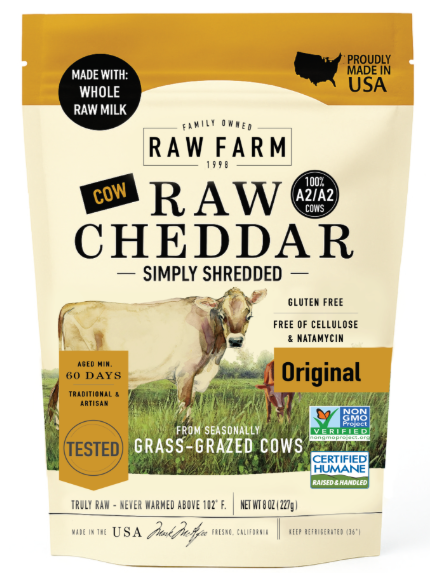
RAW FARM cheddar cheese is a common food among interviewed E. coli outbreak patients, according to the U.S. Food and Drug Administration (FDA). Illnesses associated with this product date back to last September, with others likely joining the table as additional information becomes available.
Which RAW FARM products are being investigated? Why isn’t there a recall? What should you do if you have consumed RAW FARM cheddar cheese products and became sick?
Here’s what we know so far about the RAW FARM Cheddar Cheese E. coli outbreak investigation.
The Centers for Disease Control and Prevention (CDC), FDA, along with state and local partners, are currently investigating an E. coli outbreak.
So far, this multistate outbreak of E. coli O157:H7 infections spans three states and has been connected to seven confirmed infections. According to the March 14, 2026 update, five of those cases were identified in California, one in Florida, and one in Texas. Additionally, four of the seven cases have occurred in children aged three or younger.
Two patients have been hospitalized for their illnesses. No reports of hemolytic uremic syndrome or death have been reported so far.
These seven cases have been linked to each other through genetic analysis of E. coli found in their patient samples. Genetic fingerprinting determined that “E. coli isolates from ill people shows that they are all likely closely genetically to each other.” Which means the people in this outbreak likely share a common source of infection.
In addition to the genetic information pointing to a situation where outbreak patients are “likely to share a common source of infection,” interviews point to an overlapping food exposure.
So far, three people connected to this outbreak were interviewed about their food exposures. All three people (100%) reported eating RAW FARM brand raw cheddar cheese.
Additional patient interviews are underway to gather more information. However, “epidemiologic evidence indicates that RAW FARM-brand raw cheddar cheese products made by RAW FARM, LLC are the likely source of this outbreak.
The CDC says “the true number of sick people in this outbreak is likely much higher than the number reported.” The outbreak may also include additional states not mentioned in the initial report.
This is because most normally health people with E. coli infections experience mild illnesses. Therefore, they do not seek medical attention, and they are never tested for E. coli.
Additional cases may not yet be reported. It usually takes around three to four weeks from the time a sick person goes to the doctor for their case to be linked to an ongoing outbreak.
You may have noticed that there is no official recall for RAW FARM cheddar cheese. This is because despite the FDA recommendation for RAW FARM to voluntarily remove their raw cheese products from the market, “the firm has declined” to do so.
According to the press release, “to date, to FDA’s awareness, no RAW FARM-brand cheddar cheese products from this time period have tested positive for E. coli.”
However, additional product samples have been collected. The results of which are not yet available.
Meanwhile, the CDC says for consumers to “consider not eating any affected cheese, while this investigation is ongoing.” As an additional precaution to avoid cross-contamination in your home, the CDC also says for consumers to “consider washing items and surfaces that may have touched the affected cheese using hot soapy water or a dishwasher.”
This outbreak has been linked to aged, raw milk cheese.
But what does that mean? How is this cheese any different from other cheeses?
Raw milk cheese is made from raw milk. As opposed to pasteurized milk.
What exactly is raw milk?
Raw milk is milk that has not been pasteurized. A type of heat treatment performed at a certain temperature for a specific period of time that has been proven to kill various types of bacteria. This time/temperature combination can vary depending on what is being pasteurized and the type of pasteurization. Low-temp pasteurization, for example, undergoes longer periods of heat cycles to achieve pasteurization and lower temperatures.
The purpose of pasteurization is to kill bacteria responsible for many different types of illnesses. In addition to E. coli, other bacteria and viruses can be destroyed by pasteurization.
Campylobacter, E. coli, Listeria, and Salmonella are most commonly associated with this risky dairy product. However, other illnesses, such as brucellosis, Tuberculosis, and now the emergence of bird flu are also causes for concern.
According to the product label, the cheese was aged for a minimum of 60 days. A duration that is generally known to prevent the spread of illness. However, other outbreaks involving aged raw milk cheese have been noted in the past.
In this case, a dangerous type of Shiga toxin-producing E. coli (STEC) has been found in outbreak patients.
While E. coli is a type of bacteria that lives and grows in the digestive system of humans and animals and can thrive in the environment. Not all species are quiet bystanders.
Some species of E. coli bacteria are harmless. They even make up a good part of a healthy gut microbiome and help our bodies breakdown food on the molecular level.
Others, like the bacteria found in outbreak patients, can cause serious or even life-threatening illness. The E. coli involved in this RAW FARM cheddar cheese situation is one of those life-threatening strains.
This is because this toxin-producing E. coli strains may cause hemolytic uremic syndrome. Or HUS.
So far there have been no reports of HUS in outbreak patients. However, E. coli O157:H7 often causes this type of complication in children, the elderly, and those with a weakened immune system.
HUS is a rare, but serious health condition that can develop after becoming sick with a toxin-producing bacteria.
This complication develops when toxins rupture blood cells. These ruptured bloods cells clog the filtering aspects of the kidney. This can result in kidney failure and cause other downstream negative health effects.
People with HUS require hospitalization and monitoring to prevent further damage.
Symptoms to look out for include decreased urination, paleness in cheeks and inside of lower eyelids, and fatigue.
If you have been sick with symptoms consistent with E. coli infection and begin experiencing these HUS symptoms, get medical help right away!
The symptoms of STEC infections can vary from mild to severe. Most people begin feeling sick around three to four days after exposure. However, some may begin feeling sick as early as one day or as late as 10 days or more after eating contaminated food.
Symptoms vary from person to person and can range from mild to severe.
Common symptoms to look out for include:
Normally healthy people generally recover from E. coli infection within five to seven days. Barring serious complications.
These complications may lead to hospitalization or even death. Certain groups of people are more likely to experience these complications.
The elderly, young children (under five years), and those with a weakened immune system may experience more severe illnesses or develop serious complications.
If you begin experiencing symptoms of STEC infection after consuming RAW FARM cheddar cheese or other RAW FARM products, there are a few things you can do to help your situation and others.
If you have consumed potentially contaminated raw milk, you may become sick. In some cases, it could take a week or more for symptoms to appear. Seek medical attention if you become sick. Even if you are not severely ill. Your sample may be linked to a potential outbreak investigation.
Central District Health advises, “anyone who has consumed raw milk and develops symptoms such as severe stomach cramps, diarrhea, or vomiting should seek medical care and report the illness to their local health district.”
If you still have it, retain packaging and receipts if possible. Your purchase may help investigators narrow or widen the scope of the investigation. Your assistance may be able to help prevent others from becoming sick.
Finally, reach out to an STEC lawyer. E. coli infections can cause serious illness and loss. A E. coli Lawyer can help answer questions, investigate your illness, and file a claim to recover the financial burden associated with your illness.
The Lange Law Firm, PLLC has recovered millions of dollars for families with cases just like yours. With a specialty in contamination, products liability, and food safety cases, you can trust the E. coli Lawyers of The Lange Law Firm, PLLC to navigate this complicated legal process on your behalf.
They know the questions to ask, the information to obtain, and how to build your case. Their compassionate team will help you through this unfortunate situation and get you the justice you deserve.
Don’t wait! Contact The Lange Law Firm, PLLC today!
Call (833) 330-3663 or click here to fill out an online submission form to get started today with a free consultation.
By: Heather Van Tassell (contributing writer, non-lawyer)