
Protecting families from contaminated food and water
All fields are required
Protecting families from contaminated food and water
Posted in Food Policy,Food Safety,Our Blog on March 10, 2026
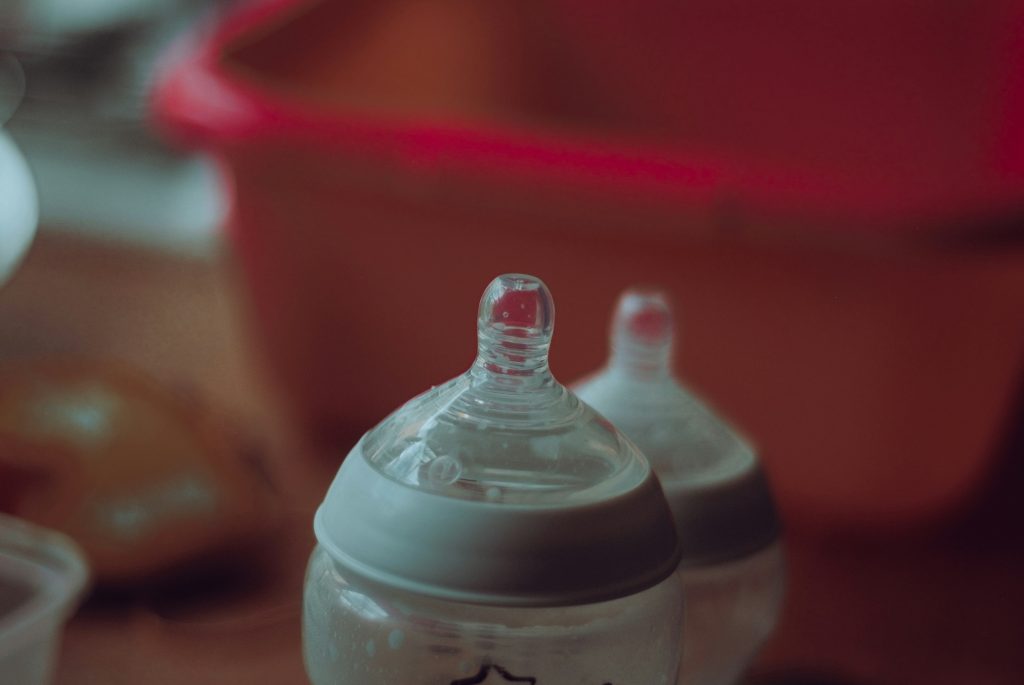
Consumer Reports, a nonprofit organization, recently published their updated baby formula test results. Last March, of the 41 baby formulas tested, about half contained at least one serious contaminant. This year, Consumer Reports updated the same study. The results were near the same.
Recent initiatives, partially brought about by the ByHeart Infant formula Botulism outbreak and recall, have put a focus on the main food supply for our most vulnerable population. However, we still have a long way to go.
Baby formula is one of the most regulated categories in our food supply. So, why does this independent organization perform this analysis? Why are tests for these specific contaminants performed? How did the tested brands do?
Follow along as we explore the Consumer Reports updated baby formula test results, identify why this information is so important to parents, and offer options if your child has been negatively impacted by contaminated baby formula.
Last year’s Consumer Reports study found arsenic, lead, PFA’s, and other harmful chemicals in unacceptable amounts in baby formula. The result of the 2026 study were not much different. More formulas were evaluated. However, roughly 50% of all formulas still contained a harmful contaminant.
Additional infant formulas, such as alternative-protein formulas like soy-and goat-milk-based formulas, as well as liquid formulas were added to this year’s study.
Despite 26 of the 49 tested formulas containing contaminants, Consumer Reports seems optimistic at the progress.
“Fortunately, the results of our tests show that there are still many safe, inexpensive options for parents on the market today, and many are available through the Special Supplemental Nutrition Program for Women, Infants, and Children, or WIC.”
Consumer Reports included several harmful contaminants that have acute and/or lasting impact on the child’s body. Arsenic, lead, PFAS, and other chemicals were evaluated in the study.
Both rounds of baby formula contaminant evaluations included arsenic. This heavy metal can increase the risk for certain cancers. It originates from the Earth’s crust. However, certain industrial processes and pesticides contribute to environmental contamination. It often makes its way into our food supply by way of contaminated groundwater and soil where crops are grown.
The Environmental Protection Agency (EPA) has established an arsenic limit of 10 parts per billion (ppb) in municipal drinking water. However, according to Consumer Reports, “the FDA does not currently have limits on how much arsenic is allowed in baby formula.”
You wouldn’t think that arsenic would be an issue in baby formula. However, the previous and updated baby formula test results prove otherwise.
Without an established limit, Consumer Reports determined their own and created a hazard quotient based on the level where “no adverse health effects would be expected.”
For powdered formula, the level was set to 3.62 ppb or greater. Concentrated formula levels were set to 0.81 ppb. Ready-to-feed formulas were set to 0.50 ppb. This was based on a daily serving of formula for an average body weight 3-month-old.
Consumer Reports found 26 of the 49 formulas had inorganic arsenic levels at or above the level of concern.
Another heavy metal tested in the Consumer Reports study involved lead.
Lead impacts the developing brains and bodies of babies. Consumer Reports cites that several studies have found childhood lead exposure linked to attention deficit hyperactivity disorder (ADHD), behavioral problems, and lowered IQ.
There is no “safe” level of lead for childhood exposure. However, like arsenic, lead is naturally occurring in the environment. Unlike arsenic, however, lead is on the FDA’s radar. In fact, an oversight plan called “Closer to Zero” provides guidance to baby and toddler food manufacturers to keep lead levels below 10 or 20 ppb (depending on ingredients).
In the 2025 tests, no formula was above the Consumer Reports “level of concern” (borrowed from California’s maximum daily limit). This year’s study, however, found three formulas exceeding the level of concern and several more approaching it.
Per- and polyfluoroalkyl substances, or PFAS are sometimes called forever chemicals. This recently publicized contaminant, unlike arsenic and lead, is not naturally occurring. They are human-made pollutants produced from stick- and stain-resistant applications.
PFAS have recently been connected to fertility issues and impacts on the immune system and longevity.
Many of the infant formulas tested contained PFAS. In fact, over 25% of tested infant formulas contained 0.1 to 5.6 ppb.
Other “concerning chemicals” evaluated were acrylamide, cadmium, mercury, and BPA.
Acrylamide and BPA are chemical biproducts made through manufacturing processes. Whereas cadmium and mercury, like lead and arsenic, are naturally occurring heavy metals made more prevalent by industry.
Acrylamide was detected in two of the tested powdered formulas. BPA was detected in three. While cadmium and mercury were detected in several formulas, their levels were so low that Consumer Reports did not consider them “concerning.”
Several aspects of our government manage the safety of our food supply. Infant formula, being one of the most regulated of all foods in the food supply.
So, why would an independent organization need to perform these types of tests?
Based on the updated baby formula test results, I would say that there is serious room for improvement. While there has been some progress since Operation Stork Speed launched shortly after last year’s Consumer Reports Baby Formula evaluation, the problem persists.
In some cases, it has gotten worse.
Manufacturers are still not required to test for these contaminants. If they do choose to test for them, they are not obligated to share their test results with the FDA or their customers.
Additionally, unlike other countries like the EU, Canada, Australia, and New Zealand, the United States does not have established limits on the levels of contaminant allowed in infant formula.
So, what exactly did the Consumer Reports study find this year?
The “top choices” included baby formulas with “contaminants not detected or detected below level of concern.”
These included (in alphabetical order):
The following “worse choices” contain some contaminants “at or above level of concern.”
The included (in alphabetical order):
Contaminants in baby formula can cause lasting harm. If your child has consumed baby formula and developed problems, you may have a legal case.
A significant amount of evidence is necessary to prove these cases. An experienced Baby Formula Contamination Lawyer can help gather this evidence, point you in the direction of resources, and represent you in court. However, the sooner this evidence can be obtained increases probability of building a strong case.
The Lange Law Firm, PLLC has a Baby Formula Contamination Lawyer that can help! Call (833) 330-3663 or fill out our online submission form and a compassionate member of our team will go over the details of your situation in a free, no-obligation consultation.
Don’t wait! Call today!
By: Heather Van Tassell (contributing writer, non-lawyer)