
Protecting families from contaminated food and water
All fields are required
Protecting families from contaminated food and water
Posted in Food Policy,Our Blog on April 23, 2026
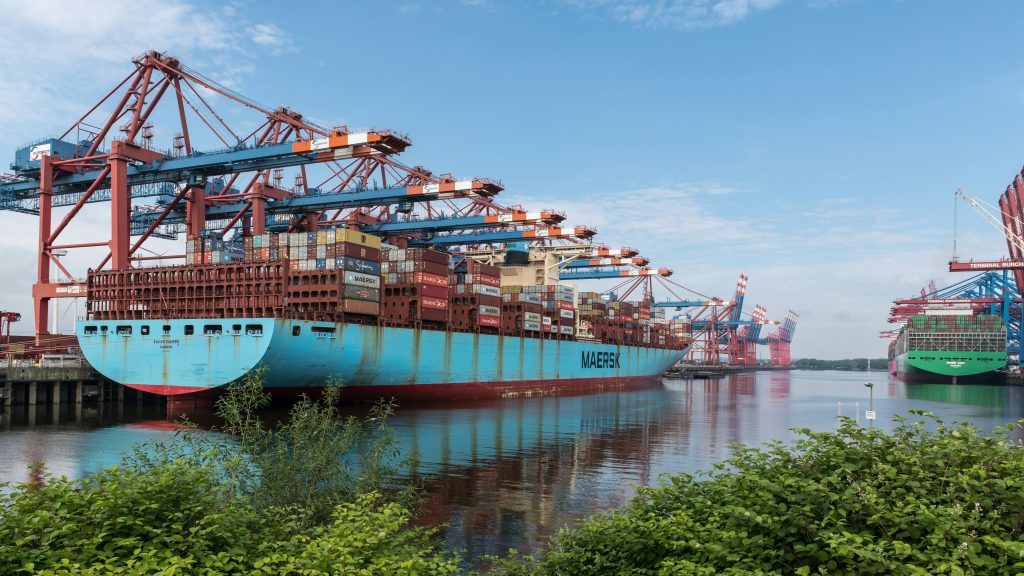
The Seafood Import Monitoring Program is a traceability program meant to improve the safety of imported seafood. It provides the framework of what is required of foreign seafood importers. It’s goal is to ensure appropriate recordkeeping and traceability from the point of harvest to entry into U.S. commerce. Much like what is required for US producers.
It empowers the National Marine Fisheries Service and the U.S. Customs and Border Protection agencies to prevent entry of illegal, unregulated, and unreported fishing products from entering U.S. commerce.
Existing rules within the framework are not all-inclusive. These rules only apply to a certain number of fish species.
There have been some recent moves intended to strengthen this Seafood Import Monitoring Program. But there has been some push and pull on the final outcome. In fact, documents governing the Program were recently reviewed. On April 21, 2026, the Congressional Research Service updated the document.
Not much changed from the previous version. Funding remained consistent and talks about expansion were mentioned. What does all this mean?
Let’s find out!
The Secretary of Commerce established the Seafood Import Monitoring Program in 2016. In 2018 the Program became fully operational. As of fiscal year 2023, the Program covered about a third of the U.S. seafood imports totaling approximately 1.7 billion pounds of seafood.
Recent attempts to expand the Seafood Import Monitoring Program to include all imported seafood products have failed. Even after recent updates, the scope is limited to 13 species groups. The list includes the most commonly imported and consumed species groups.
Seafood currently evaluated includes:
For now, the scope of the Seafood Import Monitoring Program includes these 13 species groups.
Seafood safety standards vary widely from country to country. Some may have standards stronger than ours. But others have no standards at all.
The purpose of this Program is to ensure that regardless of where the seafood product originates, it meets or exceeds the seafood standards in the United States. It ensures that the product is traceable, should a problem occur. Without this traceability, it would be difficult to narrow down recalls. This could result in unnecessarily broad recalls resulting in food waste. Or it could impede recalls altogether. Leaving American consumers at risk. Neither option is favorable.
While the Seafood Import Monitoring Program cannot evaluate every shipment that reaches U.S. soil, spot audits help to ensure that the appropriate recordkeeping and traceability documents are maintained. This is especially important when things go wrong.
Over the past few years, we have seen some outbreaks and/or concerns relating to imported seafood. Fortunately, traceability documentation allows outbreak investigation to operate like it would with a domestic product.
In February 2026, the Washington Department of Public Health notified the FDA of norovirus-like illnesses in their jurisdiction. These illnesses were connected to oysters from Stellar Bay Shellfish Ltd. A Canadian company.
Illnesses traced back to shellstock tags from the British Columbia, Canada harvest area BC-17-20 (Nanoose Bay). Eventually a recall for raw oysters harvested between December 22, 2025 and February 4, 2026 by Stellar Bay Shellfish Ltd from BC 17-20 CLF#1401656 was announced.
It is unclear how many people were impacted by norovirus from these potentially contaminated oysters. However, swift action likely reduced the overall potential number of illnesses.
In August 2025, sensational headlines of radioactive shrimp imported into the United States from Indonesia were everywhere.
With good reason.
It was a pretty big deal.
Customs & Border Protection detected Cesium-137, a radionuclide that can cause human illness, was detected in a shipping container containing frozen shrimp products processed by PT. Bahari Makmur Sejati (doing business as BMS Foods).
While other BMS products did not test positive for Cesium-137, a fairly large recall was announced which impacted products across the country. This recall was possible because the list of products connected to BMS Foods was attainable.
Additionally, Import Alerts were placed to ensure no other BMS or PT. Bahari Makmur Sejati products entered U.S. commerce until the unsanitary conditions were resolved and the threat to human safety was removed.
The U.S. Food and Drug Administration (FDA) traced at least six reports of Salmonella-related illnesses to cooked shrimp distributed by Avanti Frozen Foods imported from India according to a 2021 press release.
Avanti Frozen Foods was able to track those products back and destroy remaining product potentially contaminated with Salmonella bacteria.
Recalls for specific products, including frozen, cooked, and ready-to-eat shrimp products distributed nationwide from late December 2020 to late February 2021 were announced.
At least sixteen people with one or more gastrointestinal illness were linked to oysters harvested from Estero El Cardon in Baja California Sur, Mexico.
Illness onset ranged from December 16, 2018 through April 17, 2019.
Two people were hospitalized in this outbreak.
Laboratory tests on outbreak patient samples identified multiple pathogens. In fact, some people were infected with more than one pathogen.
Sick people were positive for Campylobacter lari, Shigella flexneri, Vibrio parahaemolyticus, Shiga toxin-producing Escherichia coli, Escherichia coli non-O157, Vibrio albensis, norovirus. There were also four cases of illness where the pathogen could not be identified.
The Mexico public health authorities requested all raw oysters distributed from Estero El Cardon between the last week of April 2019 and the first week of May 2019 be recalled.
You may be wondering how these issues slipped through the cracks. What is the point of the Seafood Import Monitoring Program if they cannot prevent illnesses like these from happening.
The answer is simple. That isn’t the purpose of this Program.
Fortunately, there is an existing program for proactive measures. It is impossible to test EVERY product entering the United States. The backlog would cause food to rot at the docks.
The Human Foods Program has been strengthened over the years. Recent increases in testing capabilities have helped reduce illnesses in this way.
Will we ever reach zero illnesses or no need for recalls?
That is unlikely. Human error will always be a factor. Sampling activities can only do so much.
But we can agree that things are moving in the right direction. Empowering and strengthening both the Human Foods Program and the Seafood Import Monitoring Program will surely help tip the scales in the right direction.
If you’d like to know more about food safety topics in the news, like “Congress Takes Another Look at the Seafood Import Monitoring Program,” check out the Make Food Safe Blog. We regularly update trending topics, foodborne infections in the news, recalls, and more! Stay tuned for quality information to help keep your family safe, while The Lange Law Firm, PLLC strives to Make Food Safe!
By: Heather Van Tassell (contributing writer, non-lawyer)