
Protecting families from contaminated food and water
All fields are required
Protecting families from contaminated food and water
Posted in Food Allergens,Food Allergy,Our Blog on April 22, 2026
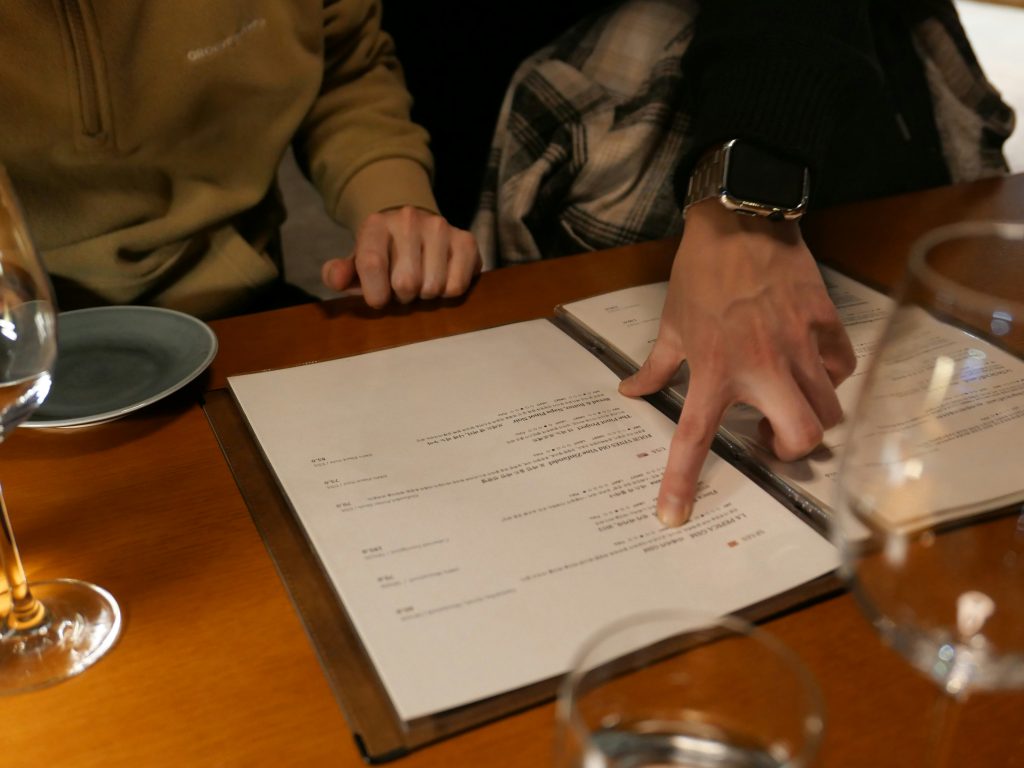
Prior to restaurant food allergen laws, aside from risky foods like raw or undercooked seafood and undercooked beef, there wasn’t much on the label to help those who need more information for their ordering decisions.
People with celiac or require gluten free had to ask. If you had an allergy to something like sesame, you had to specifically ask. After all, garnishes are not usually on the menu.
I cannot tell you how many times I have been surprised to get a plate at a restaurant with green onions or tomatoes when there was no indication on the item description to suggest its presence. For me, the surprise is an inconvenience. My aversion to green onions can be picked off and placed aside.
Those with a food allergy do not have the same experience.
In fact, around 2% of adults and 5% of infants and young children in the United States suffer from food allergies, accounting for about 30,000 emergency room visits and 150 deaths due to allergic reactions to food. The eight most common food allergens (milk, eggs, fish, shellfish, tree nuts, peanuts, wheat, and soybeans) account for 90% of food allergies.
This is a big, but solvable problem.
New restaurant food allergen laws sweeping across the country are likely to change this. Making dining out a less stressful situation for those with allergy concerns.
What states have already adopted these laws? Which ones are working toward them? While this is not intended to be an all inclusive list, if you don’t see your state covered here your state health department should have resources for you. If restaurant food allergen laws are not on their radar, writing to your local and state representatives could bring the topic to their attention.
But first, let’s talk about what enforcement activities are going on at the national level.
There are three major national food allergen laws that apply to this topic.
One of the earlier food allergen laws is the Food Allergen Labeling and Consumer Protection Act of 2004 or FALCPA. Since 2004 this Act has required packaged foods to clearly identify (in English) if it contains one or more of the top 8 food allergens.
The FDA 2022 Food Code updated allergen labeling requirements for unpackaged food in restaurants. An effort that was part of the start of restaurant food allergen laws. However rudimentary the start.
In addition to adding sesame to the top food allergen list, an amendment to address “inclusion of written notification of major food allergens in unpackaged foods” was added.
The FASTER Act focused on sesame allergies. As of January 1, 2023, sesame seeds and sesame products officially joined the major allergen list and are now treated the same as tree nuts or milk. Sesame must be noted on the label and either bold or highlighted in the ingredients and listed as an allergen in the allergen warning section.
California and New York have led the way for other states to follow their state level restaurant food allergen laws. Allowing them to essentially copy and paste in their jurisdictions to create a safer experience for people who suffer from food allergies.
California’s ADDE Act is the first state level regulation explicitly requiring allergen disclosure on restaurant menus. All types of restaurant menus.
What does that look like?
All physical menus, digital menus, menu boards, and even QR-code driven menus must provide written notification of the nine major allergens for each menu item.
Right now, this only applies to facilities with 20 or more locations and restaurants have until July 1, 2026 to comply. But it is a start.
The New York Assembly Bill A6558A presents the first of its kind state law that requires food allergen labeling on foods packaged on the premises. They must comply to food allergen labeling requirement just like factory packaged goods.
This includes things like deli sandwiches in clamshell containers, bakery style boxes containing baked goods (cut cakes, muffins, etc.), and grab-and-go convenience packaged foods. Among others.
Only major food allergens need labeling for these types of packaging, according to the bill.
This one takes effect in November 2026.
At least nine other states have light restaurant food allergen laws on the books.
Connecticut’s PA 23-115, which was enforced by January 1, 2025, was a step in the right direction. Food establishment menus were required to clearly post in a conspicuous manner for customers to “notify their server, prior to placing an order, of any food allergies.”
Additionally, a food allergen poster was requested of the state Department of Public Health. Food establishments must train employees on what to do when a customer notifies them of a food allergy and present the poster in a conspicuous area in the kitchen or staff area.
Illinois does not have consumer level food allergen notices. They do, however, have a requirement for a food allergen poster and employee training.
While not food related, the state does have a latex glove ban, which protects consumers with latex allergies. I am unsure if other states also have that rule. This happens to be the first I have come across with one.
The state of Massachusetts Food Protection Program (FPP) includes a warning similar to Connecticut. Consumers are warned on the menu to “inform your server if a person in your party has a food allergy.” A food allergy awareness poster also must be posted in a staff area and allergen training is part of the certified food protection managers’ certification. These requirements became effective October 7, 2024 and are currently enforced.
A 2026 legislation, HB 181 updates employee training requirements for food allergen awareness. Additionally, like most other states, Maryland requires a Food Allergen Awareness poster to be placed in staff areas.
Michigan is a state with more extensive restaurant food allergen laws. HB-5402 updates existing Michigan Food Law to require restaurants serving unpackaged food to post allergy advisory on the menu or menu board or at the point of order.
The state of New Jersey, like other states, also requires a food allergen awareness sign in the kitchen or staff area. At the consumer level, food establishments have some flexibility. Those that already display signs or tents on the dining tables may place allergen awareness wording on the table. For those who don’t do this, there is no requirement to do so. However, the food establishment must include that information prominently on the menu.
Under Rhode Island’s General Assembly law 23-20.12-2, food service establishments must adhere to certain food allergy awareness program requirements.
For example, a food allergy awareness poster must be prominently displayed in the staff area, a designated manager with knowledge of relevant issues concerning food allergies must be on duty, and menus must include a notice of the customer’s obligation to inform their server of any food allergies.
The Texas Sergio Lopez Food Allergy Awareness Act, or SB 812 was signed into law in 2023, with enforcement beginning September 1, 2024. Texas food establishments must post an allergen awareness poster in staff areas. Fairly standard across the state level. What sets this act apart from other state programs is the training. Both food handler and food manager training programs must include food allergy content in addition to food safety topics.
A 2015 Virgina bill requires restaurant training to include food allergy awareness in addition to existing food safety topics. In 2025 another bill that would have required menu-level allergen notices was vetoed. To date, that requirement does not exist for the state.
Was your state on the list? Were you surprised about the laws governing food allergen awareness?
If you’d like to know more about food safety topics in the news, like “New Restaurant Food Allergen Laws Are a Game-Changer for Eating Out,” check out the Make Food Safe Blog. We regularly update trending topics, foodborne infections in the news, recalls, and more! Stay tuned for quality information to help keep your family safe, while The Lange Law Firm, PLLC strives to Make Food Safe!
By: Heather Van Tassell (contributing writer, non-lawyer)